

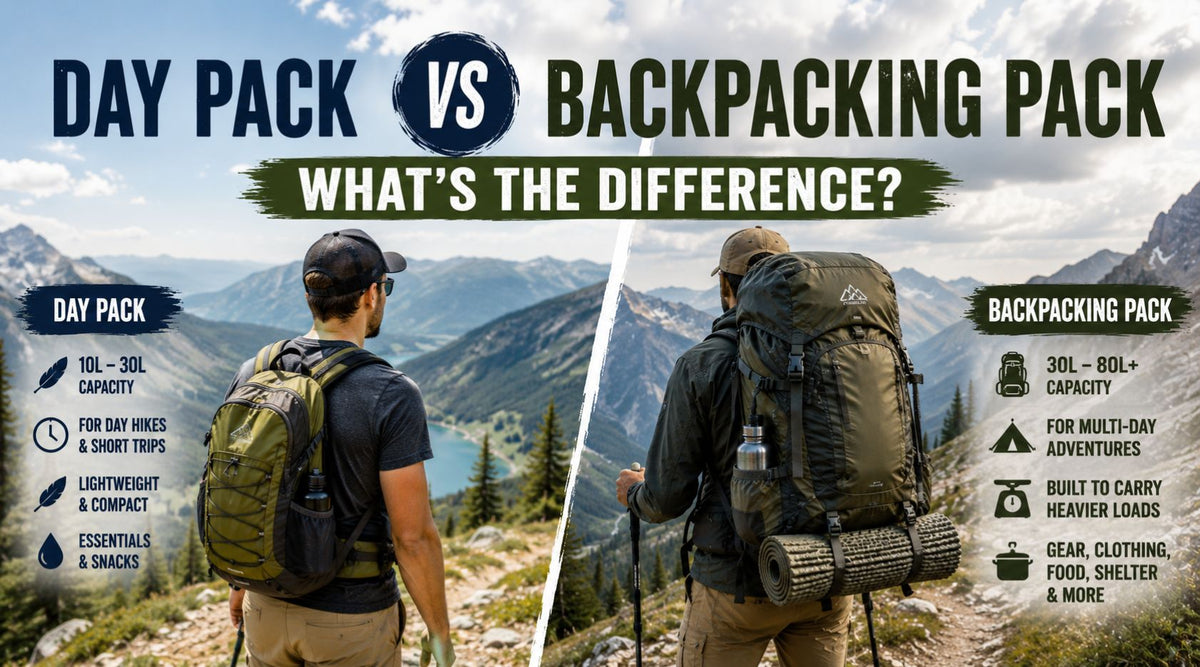
Standing in front of a wall of backpacks, it is easy to wonder why some cost twice as much and look nearly identical to a smaller, cheaper option. The real answer comes down to purpose. A day pack vs backpacking pack comparison is not just about size, it is about what each one is actually built to do, how long it is meant to carry a load, and how much support your body needs over the course of a hike.
This guide breaks down the practical differences so you can figure out which one fits your next trip, and browse our Day Packs or Backpacking Packs collections with a clear idea of what you need.
Day Pack vs Backpacking Pack: The Core Difference
At the most basic level, a hiking daypack is built for a single day out on the trail. It carries water, snacks, a light jacket, and a handful of small essentials, usually somewhere in the 10 to 30 liter range.
A backpacking pack, on the other hand, is built to support multiple days away from home. It needs to hold a tent, a sleeping bag, a sleeping pad, food, and clothing for changing conditions, which usually puts it in the 50 to 80 liter range, sometimes larger for extended trips.
The difference is not just about how much each one holds. It is about how each pack is engineered to carry that load comfortably over very different amounts of time and distance.
Size and Capacity
Day packs typically range from 10 to 30 liters. A short hike might only need 15 liters, while a full day out in variable weather could call for closer to 25 or 30.
Backpacking packs usually start around 50 liters and can go up to 80 liters or more for week long trips or winter conditions. Anything smaller than 50 liters tends to struggle to fit a full multi day kit.
If you are unsure which range fits your typical trips, it often helps to think in terms of nights rather than liters. One day out points toward a day pack. Two or more nights points toward a backpacking pack.
Frame and Support Structure
This is where the difference becomes obvious once you pick both packs up.
A day hiking backpack rarely needs a rigid internal frame, since the loads it carries are light enough that simple padded straps and a basic back panel are enough for comfort.
A multi day backpacking pack almost always includes an internal frame, a structured hip belt, and an adjustable suspension system. These features exist because a loaded backpacking pack can weigh 30 to 50 pounds or more, and without a frame to transfer that weight to your hips, your shoulders and lower back would take the full brunt of it within the first mile.
Comfort Over Distance and Time
A lightweight hiking pack is designed for a few hours of movement, so comfort features are usually simpler: breathable mesh, basic padding, and a snug but flexible fit.
A backpacking pack needs to stay comfortable for entire days at a time, sometimes across a full week or more. That means more attention to torso length sizing, adjustable load lifters, and a hip belt built specifically to carry most of the pack's weight instead of your shoulders.
If you have ever worn a day pack loaded far beyond what it was designed for, you already know why this distinction matters. The straps dig in, the load shifts unevenly, and what should be a comfortable hike turns into a sore back by the end of the day.
Storage and Organization
Day packs tend to have a simpler layout, often just one or two main compartments plus a few small pockets for a phone, snacks, or a first aid kit.
Backpacking packs are built around organization for multi day trips, with dedicated sleeping bag compartments, external attachment points for a tent or trekking poles, and multiple access points so you are not digging through the entire pack to find one item.
If you regularly carry gear for others, like a shared stove or extra water filter, a backpacking pack's larger, more structured storage makes a noticeable difference over a full trip.
When to Choose a Day Pack
A day pack vs backpacking pack decision usually leans toward the day pack when:
-
Your hike is under 8 hours and does not involve an overnight stay
-
You are carrying only water, snacks, layers, and small essentials
-
Weight and speed matter more than storage capacity
-
You want a lighter, more affordable option for regular local hikes
When to Choose a Backpacking Pack
The backpacking pack becomes the better choice when:
-
You are camping overnight or for multiple nights
-
You need to carry a tent, sleeping bag, and sleeping pad
-
Your total gear weight is likely to exceed what a day pack's straps can comfortably support
-
You are hiking in conditions where extra layers, food, and water treatment gear are necessary
Common Mistakes When Choosing Between the Two
Using a day pack for an overnight trip. Without a frame or proper hip belt, an overloaded day pack quickly becomes uncomfortable and can strain your shoulders.
Buying a backpacking pack for regular day hikes. A large pack that is only ever half full is heavier than it needs to be and often less comfortable than a properly sized hiking day pack.
Ignoring torso fit on either pack. Fit matters at every size. Even the best backpacking pack for multi day trips will feel wrong if the torso length does not match your body.
Assuming liters alone tell the whole story. Two packs with the same capacity can feel completely different depending on frame type, suspension, and hip belt design.
What to Pair With Either Pack
Whichever style fits your trip, a few extras make the experience better:
-
A hydration pack or bladder for hands free drinking
-
A sleeping bag and sleeping pad if you are stepping up to overnight trips
-
Trekking poles from our Trekking Poles collection for stability on longer or steeper trails
-
Compression sacks or rain covers from our Backpack Accessories collection to protect gear on either pack
Final Thoughts
The choice between a day pack vs backpacking pack really comes down to trip length and load. A day pack is light, simple, and built for a handful of hours on the trail. A backpacking pack is structured, supportive, and built to carry everything you need for multiple days away from home. Match the pack to the trip, not the other way around, and both your shoulders and your gear will thank you.
Ready to gear up for your next trip? Browse our full Day Packs and Backpacking Packs collections and find the right fit for how you hike.


 Tents & Shelter
 Sleep Systems
 Packs & Hiking
 Camp Kitchen
 Light & Power
 Survival & Skills
 Camping 101
 Fishing