

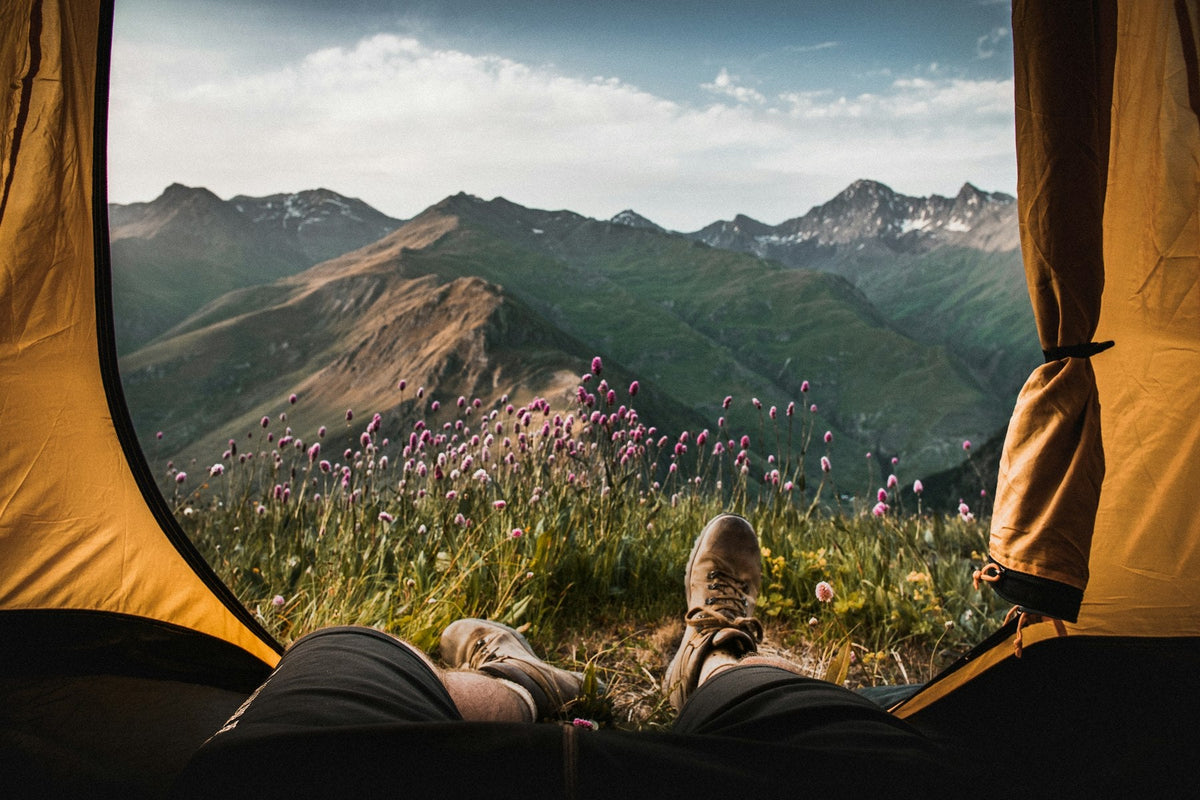
Cold nights are the fastest way to ruin a camping trip. Not dramatically cold—not frostbite cold—just the creeping, shiver-yourself-awake, lie-there-staring-at-the-ceiling-at-3-AM cold that makes you question every decision that led to this moment. A sleeping bag that matches your conditions is the single piece of gear that most directly determines whether you sleep well at camp. And sleeping well at camp determines whether you enjoy everything else.
Sleeping bags are also one of the most confusing categories in outdoor gear. Down versus synthetic. Temperature ratings that don't mean what you think they mean. Mummy vs. rectangular. Fill power numbers. EN/ISO standards versus manufacturer claims. This guide will make sense of all of it—and point you toward options that won't require you to take out a second mortgage to stay warm.
How Sleeping Bag Temperature Ratings Actually Work
The temperature rating on a sleeping bag is not the temperature at which you'll be comfortable. It's the temperature at which an average person won't die from hypothermia—technically, the ISO/EN standard lower limit rating. The "comfort" rating, which is usually printed separately and is the number most people actually want, runs 10 to 15 degrees higher than the limit rating.
In practical terms: a bag rated to 20°F will keep most people alive at 20°F. It will keep most people comfortable around 30 to 35°F. Buy for the conditions you'll actually face, then add a 10-degree buffer. If your destination regularly sees 40°F nights, a 30°F-rated bag is the right call. This single adjustment prevents the most common sleeping bag buying mistake.
Down vs. Synthetic Insulation: The Honest Answer
Down Fill
Natural down—typically goose or duck—offers the best warmth-to-weight ratio available. A high-quality down bag compresses dramatically, weighs very little for its warmth level, and lasts for decades with proper care. The downsides: down loses nearly all insulating ability when wet. If the insulation gets saturated, you will be cold. Treatment options like hydrophobic down improve this significantly but don't fully solve it. Down also costs more than synthetic at comparable ratings. For dry-climate backpacking and weight-sensitive applications, down is usually the right answer.
Synthetic Fill
Synthetic insulation—polyester-based fibers engineered to mimic down's loft—has two key advantages over down: it retains most of its insulating ability when wet, and it costs less. The disadvantages: it doesn't compress as small, weighs more than comparable down, and doesn't last quite as long before losing loft. For humid climates, near-water camping, and any situation where your bag might get wet, synthetic is the smarter choice. For casual camping and most car camping applications, synthetic at the right temperature rating is the better value.
Fill Power: What It Means and What It Doesn't
Down fill power measures how much space one ounce of down occupies—higher fill power means better loft and warmth per ounce. A 700-fill-power down bag will be lighter and more packable than a 600-fill-power bag at the same temperature rating. The tradeoff is cost. Fill power of 600–700 represents good quality at reasonable prices. Fill power of 800+ is excellent quality but comes with a significant price premium. For most campers who aren't ultralight backpacking, 650 fill power is entirely adequate and doesn't require a premium price.
Mummy vs. Rectangular: Which Shape Is Right for You
Mummy Bags
Mummy bags taper toward the feet and have a fitted hood, minimizing dead air space inside the bag. Less air to warm means a warmer bag for its weight. For backpacking and cold-weather camping where warmth-to-weight ratio is important, mummy bags are the standard. The downside: if you're a side sleeper or someone who moves around a lot at night, the restricted movement feels coffin-like. Many people find mummy bags genuinely uncomfortable regardless of their warmth advantage.
Rectangular Bags
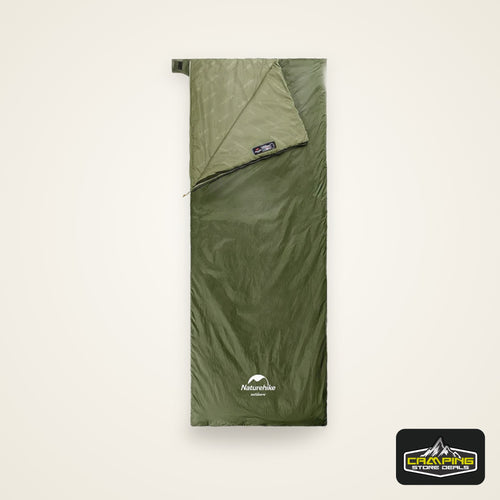
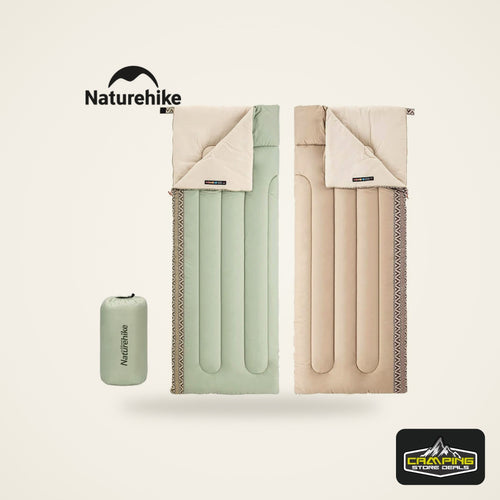
Rectangular bags offer room to move. You can roll over, sleep in any position, even open the bag and use it as a blanket on warm nights. They zip together with another rectangular bag if you're camping with a partner. For car camping at moderate temperatures where weight and packability don't matter, rectangular bags are more comfortable for most people. They run slightly less warm per ounce than mummy bags but are the better choice for casual camping use.
What to Look for in a Budget Sleeping Bag
At Camping Store Deals, we've evaluated sleeping bags the same way we evaluate all of our gear: would we use this ourselves? For budget synthetic bags in the $50–$80 range, the quality markers we look for include box-wall baffles (eliminates cold spots from sewn-through construction), a draft collar around the shoulders to prevent heat from escaping, a hood with a drawcord, and a YKK zipper or comparable quality that won't fail after a season of use.
We also look at how the bag is stuffed: a bag that goes into its stuff sack without a fight will be one you actually use. And we look at care instructions—a bag that requires dry cleaning is not a bag for real camping.
Our Sleeping Bag Recommendations by Category
Best Budget Synthetic Bag (Under $75)
Target: 20°F rating, synthetic fill, mummy or semi-rectangular shape, weight under 3.5 pounds. This is the most versatile sleeping bag purchase for campers in most of North America. It handles three-season camping with a buffer for unexpected cold snaps. Our options in this range have been field-tested and perform consistently above their price point.
Best Budget Down Bag (Under $120)
At this price, you're getting 550–650 fill power down in a mummy design rated around 15–25°F. You won't get the ultra-packability of a premium bag, but you will get genuine down warmth at a price that doesn't require a long deliberation. For backpackers wanting to experience down without a $300+ commitment, this is the entry point.
Best Car Camping Bag (Comfort Over Weight)
For car camping, weight doesn't matter. A large rectangular bag with generous insulation, a double zipper for temperature regulation, and enough interior space to sleep comfortably regardless of your size—this is the car camping bag that makes nights at camp genuinely comfortable. Under $60 for quality options at our store.
Kids' Sleeping Bags
Children need sleeping bags sized for their height, rated appropriately for the conditions, and easy enough for them to zip themselves. We carry youth sleeping bags at sub-$40 prices that handle three-season camping and fit actual children rather than running adult size. For families trying to outfit multiple kids without spending $200 per child, we're the right place to look.
The Sleeping System Is Two Pieces
A sleeping bag alone isn't enough. The sleeping pad provides insulation from the ground—conduction pulls heat away from your body faster than convection cools it from the air above. An R-value of 3.0 or higher from a self-inflating pad prevents the ground from counteracting your bag's warmth. Buy both, or the bag purchase is half a solution.
At Camping Store Deals, we carry sleeping bags and sleeping pads together, and we can help you match them to your camping conditions and your budget. The total investment in a good sleep system—bag and pad together—can come in well under $150 when you're not paying for brand names you don't need. That's a system that will run for years and make a real difference every night you spend outside.
Pro tip: go deeper with these related guides: Do You Need a Sleeping Bag Liner?, Hammock Camping for Beginners.


 Tents & Shelter
 Sleep Systems
 Packs & Hiking
 Camp Kitchen
 Light & Power
 Survival & Skills
 Camping 101
 Fishing