

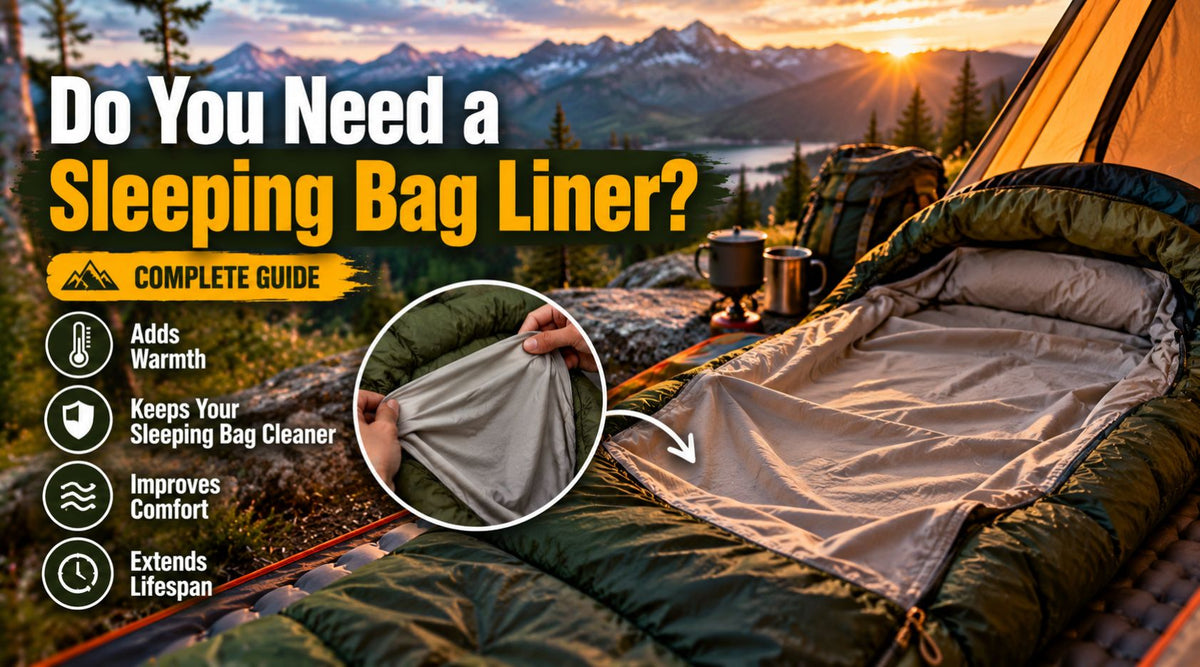
It looks like a simple fabric sack, and it often gets treated as an afterthought when packing for a trip. But a sleeping bag liner can genuinely change how warm and comfortable a night outdoors feels, sometimes by a meaningful number of degrees. This sleeping bag liner guide breaks down what a liner actually does, how much difference it really makes, and whether it is worth adding to your setup.
By the end, you will know exactly when a liner earns its place in your pack, and you can browse our Sleeping Bags collection alongside our liner options to round out your sleep system.
What Is a Sleeping Bag Liner
A sleeping bag liner is a lightweight fabric sack that fits inside your sleeping bag, sitting directly against your body. It functions similarly to a bed sheet inside a comforter, adding a layer between you and the bag's interior lining. Liners are typically made from silk, cotton, fleece, or synthetic blends, and they can be used inside a bag for extra warmth or on their own during warm weather as a standalone sleep sack.
What a Sleeping Bag Liner Actually Does
Adds Warmth
This is the most commonly cited benefit, and it is backed by real numbers rather than just marketing claims. A thin liner typically adds around 5 degrees Fahrenheit of warmth to a sleeping bag's rating, while a thicker, fleece style liner can boost warmth by 10 to 15 degrees. This makes a liner one of the most effective ways to extend a bag's usable temperature range without buying an entirely new, heavier bag.
Keeps the Sleeping Bag Clean
Body oils, sweat, and general grime build up inside a sleeping bag over repeated use, and washing a full bag is more time consuming and potentially damaging to its insulation than washing a simple liner. Using a liner means most of that daily wear goes onto a piece of gear that is far easier and safer to clean regularly.
Adds Comfort
Some sleeping bag interiors, especially synthetic ones, can feel less soft against bare skin compared to a liner made from silk or brushed cotton. A liner adds a layer of comfort that some campers find makes a noticeable difference in sleep quality, independent of any warmth benefit.
Works as a Standalone Sheet in Hot Weather
On warm nights where a full sleeping bag would be too hot, many liners can be used alone as a lightweight sleep sack, offering just enough coverage without the bulk and heat retention of the full bag.
Types of Sleeping Bag Liners
Silk liners are prized for being extremely lightweight and packable while still offering solid warmth retention, including some insulating properties even when damp. They tend to be more expensive than other materials, but many backpackers consider the weight savings worth the cost, especially on multi day trips where every ounce in the pack matters.
Cotton liners are generally the most affordable option and feel soft against the skin, but they are heavier, bulkier, and absorb moisture more than silk or synthetic alternatives, which can be a drawback on longer or wetter trips. Cotton also takes considerably longer to dry if it gets damp, which is worth considering for trips with unpredictable weather.
Synthetic liners, often made from polyester or a similar blend, strike a middle ground between cost, weight, and durability. They tend to dry faster than cotton and hold up well to repeated washing, making them a practical choice for frequent use, and they are often the most budget friendly option that still performs reasonably well across a range of conditions.
Fleece liners offer the most significant warmth boost of the common liner types, making them well suited for cold weather trips, though they are bulkier and heavier than silk or standard synthetic options. Many cold weather campers keep a fleece liner as a dedicated cold trip accessory rather than using it year round.
Vapor barrier liners are a specialized type designed to block moisture from your body from reaching the sleeping bag's insulation, which helps prevent the insulation from losing effectiveness due to dampness on extended cold weather expeditions. These are less common for typical camping and are mostly used by mountaineers and winter backpackers, since they can feel clammy in milder conditions where moisture buildup is less of a concern.
Caring for a Sleeping Bag Liner
Most liners are machine washable, which is part of what makes them convenient compared to washing a full sleeping bag. Silk liners generally do best with a gentle cycle and cold water, since heat and aggressive agitation can weaken the delicate fibers over time. Synthetic and cotton liners tend to be more forgiving and can typically handle a standard wash cycle, though checking the manufacturer's care label is always worth the extra minute.
Drying fully before storage matters just as much as washing. A liner packed away while still slightly damp can develop mildew or odor, especially if stored in a sealed stuff sack for an extended period between trips. Air drying flat or on a low tumble dry setting, depending on the material, helps preserve both the fabric and its insulating properties over repeated use.
When a Sleeping Bag Liner Is Worth Using
Cold weather trips. If you are camping near or below your sleeping bag's rated temperature, a liner can provide just enough extra warmth to keep you comfortable without needing to buy a heavier, more expensive bag.
Frequent camping. The more often you use your sleeping bag, the more a liner helps by taking on the bulk of the cleaning burden and extending the time between full bag washes.
Travel and hostel use. A liner used alone as a lightweight sleep sack is a popular choice for travelers who want a clean layer of their own for hostels or shared accommodations, independent of camping use entirely.
Hot weather camping. On warm nights, using just the liner instead of the full sleeping bag offers a lighter, cooler alternative that still provides some coverage and a familiar sleep setup.
When a Liner Might Not Be Necessary
Occasional summer camping in mild climates. If you rarely camp in conditions anywhere close to your bag's temperature rating, the added warmth from a liner may not be something you need.
Ultralight trips with strict weight budgets. While liners are generally lightweight, every added ounce matters on some minimalist trips, and skipping a liner is a reasonable way to save weight if warmth is not a concern.
Bags that are already easy to wash. Some synthetic bags are more machine washable than others, reducing one of the key practical benefits a liner typically provides.
How to Choose the Right Liner for Your Sleeping Bag
Match the liner shape to your bag. Liners come in mummy, rectangular, and semi rectangular shapes, generally mirroring standard sleeping bag shapes. Using a liner shaped similarly to your bag helps it sit properly without excess bunched up fabric.
Consider your typical climate. Cold weather campers benefit most from fleece or thicker synthetic liners, while those camping in milder or warmer conditions often do better with a lightweight silk or thin synthetic option.
Think about packed size and weight. Backpackers should prioritize silk or lightweight synthetic liners that pack down small, while car campers have more flexibility to use a bulkier, more insulating fleece liner without worrying about pack space.
Check the liner's length. Liners are typically sold in standard or long sizes. Taller campers should double check length specifications, since an undersized liner can feel cramped or ride up during the night.
Common Mistakes When Using a Sleeping Bag Liner
Assuming any liner adds significant warmth. Thin cotton or silk liners add a modest boost, generally around 5 degrees. Expecting a dramatic difference in warmth from a lightweight liner alone can lead to being underprepared for genuinely cold conditions.
Choosing cotton for wet or humid trips. Cotton retains moisture and dries slowly, which can actually reduce comfort and warmth in damp conditions compared to synthetic or silk alternatives.
Skipping a liner on shared or rented gear. If you ever use a shared or rented sleeping bag, a liner is one of the simplest ways to keep a barrier between yourself and gear that has been used by others.
Forgetting to wash the liner regularly. One of the main benefits of a liner is easier cleaning, but that benefit only holds if it is actually washed regularly rather than left unwashed for an entire camping season.
What to Pair With a Sleeping Bag Liner
To round out a complete, comfortable sleep system, consider pairing your liner with:
-
A properly rated sleeping bag suited to your typical camping temperatures
-
A sleeping pad for insulation and cushioning from the ground below
-
A tent footprint and properly sealed tent to keep the overall sleeping environment dry and protected
Sleeping Bag Liner Guide: Quick Checklist
-
Silk or lightweight synthetic for minimal weight and packed size
-
Fleece for the biggest warmth boost on cold weather trips
-
Cotton only for casual, dry weather use due to slower drying time
-
Shape and length matched to your sleeping bag and height
-
Washed regularly to maintain the hygiene benefits it is meant to provide
Final Thoughts
This sleeping bag liner guide comes down to a simple question: how much do warmth, cleanliness, and comfort matter for your typical trips. For cold weather camping, frequent use, or travel situations, a liner is a small, lightweight addition that offers a real, measurable benefit. For occasional summer camping in mild conditions, it becomes more of a comfort preference than a necessity. Either way, understanding what a liner actually does helps you decide whether it belongs in your kit.
Ready to complete your sleep system? Browse our full Sleeping Bags collection and find a liner that matches how and where you camp.


 Tents & Shelter
 Sleep Systems
 Packs & Hiking
 Camp Kitchen
 Light & Power
 Survival & Skills
 Camping 101
 Fishing