

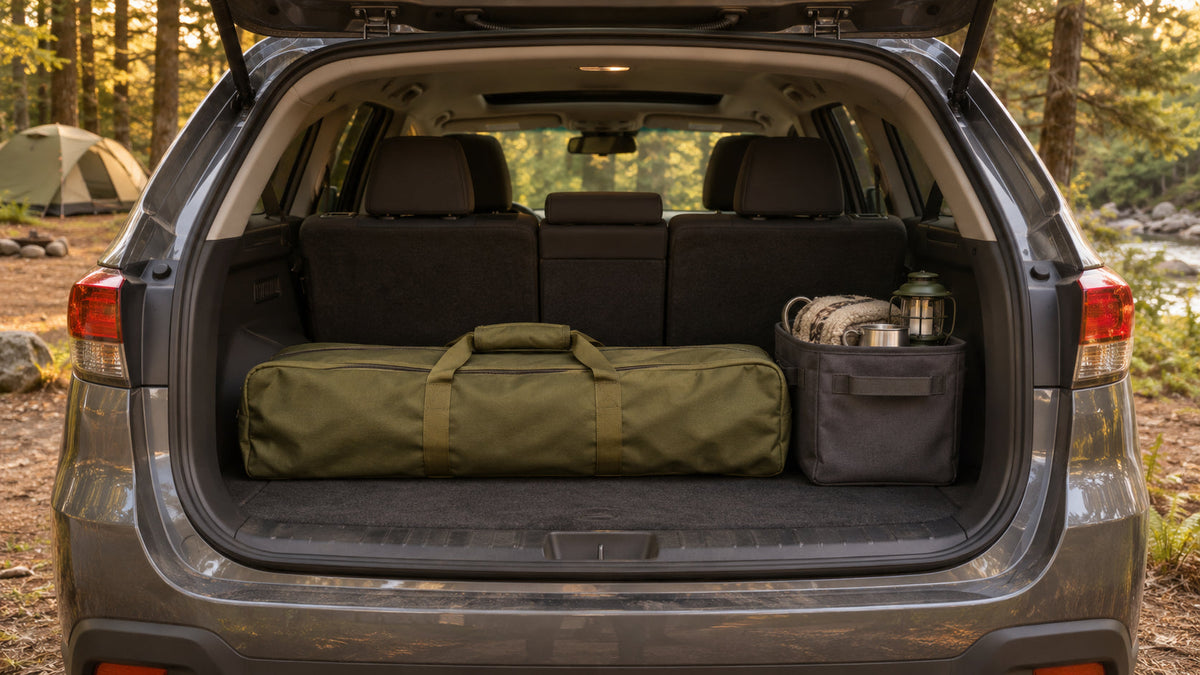
A cot can fit your tent perfectly and still be the thing you dread packing. The trouble usually shows up at an awkward moment: the seats are already in use, the cooler is full, and the cot bag won’t turn through the hatch. Compare the package you’ll actually move, not just the bed you’ll sleep on.
Find out what “packed” includes
Put three numbers next to the cot you’re considering: packed length, width and depth. Then write down the packed weight. Look for specifications for the exact size and version, and confirm whether the carry bag, mattress and accessories are included in those figures. If a listing only gives dimensions for the fully assembled bed, ask for the missing numbers instead of estimating from the photos.
Different designs pack in different ways. A folding frame may stay together but make a wider, flatter package; a breakdown model can put the fabric, rails and supports in a smaller bag, with more pieces to set up and repack. The manufacturer’s Cot One Convertible specifications show what to look for: packed and assembled figures are listed separately. Use the same distinction when comparing any model.
Measure the opening, not just the trunk
With the rear seats positioned as they’ll be on the trip, measure the narrow point of the hatch, then the clear floor length and the space between the wheel housings. Include the load lip and anything you carry all the time. An empty vehicle is rarely what you’ll be loading on departure morning.
Cut a cardboard rectangle to the bag’s length and width or make a stand-in from an empty duffel. Try putting it in the proposed position. Now add your real cooler and camp bins and repeat. A long bag might fit once it’s inside but need turning room you don’t have after the other gear goes in. If there are two cots, test both at once. Make sure you can still retrieve the things you might need before unloading the rest.
Walk the last stretch
Car camping can still involve a walk. Find out whether your site is next to the parking space, at the end of a path or down steps. Look at where the handles are on the bag and whether the package can be carried comfortably while you keep a hand available when needed. If a wagon is part of the plan, compare the bag’s length with its usable bed, not just the wagon’s outside dimensions. Plan an extra trip rather than balancing gear you can’t control.
For a shared trip, put a tag on each similar bag and keep the right bedding with each sleeper. If a mattress travels separately, count it as its own piece. That little change makes the loaded-car test and the return trip more honest.
Decide what you’ll do when it’s time to pack up
Try the full pack-down sequence once at home using the manufacturer’s instructions. Can you return the cot to its bag without forcing the zipper? Do removable pieces have dedicated slots or a pouch? Is there a sensible place to put bedding if it doesn’t fit with the frame? For gear that comes home damp or dirty, keep it separate from clean bedding and follow the manufacturer’s care and drying directions before storage.
Save a short note with the packed dimensions, the bag’s vehicle position and what travels separately. Then check the other half of the decision with our guide to checking a cot’s fit inside a tent. The right cot needs to work both places: where it gets packed and where it gets unfolded.


 Tents & Shelter
 Sleep Systems
 Packs & Hiking
 Camp Kitchen
 Light & Power
 Survival & Skills
 Camping 101
 Fishing