

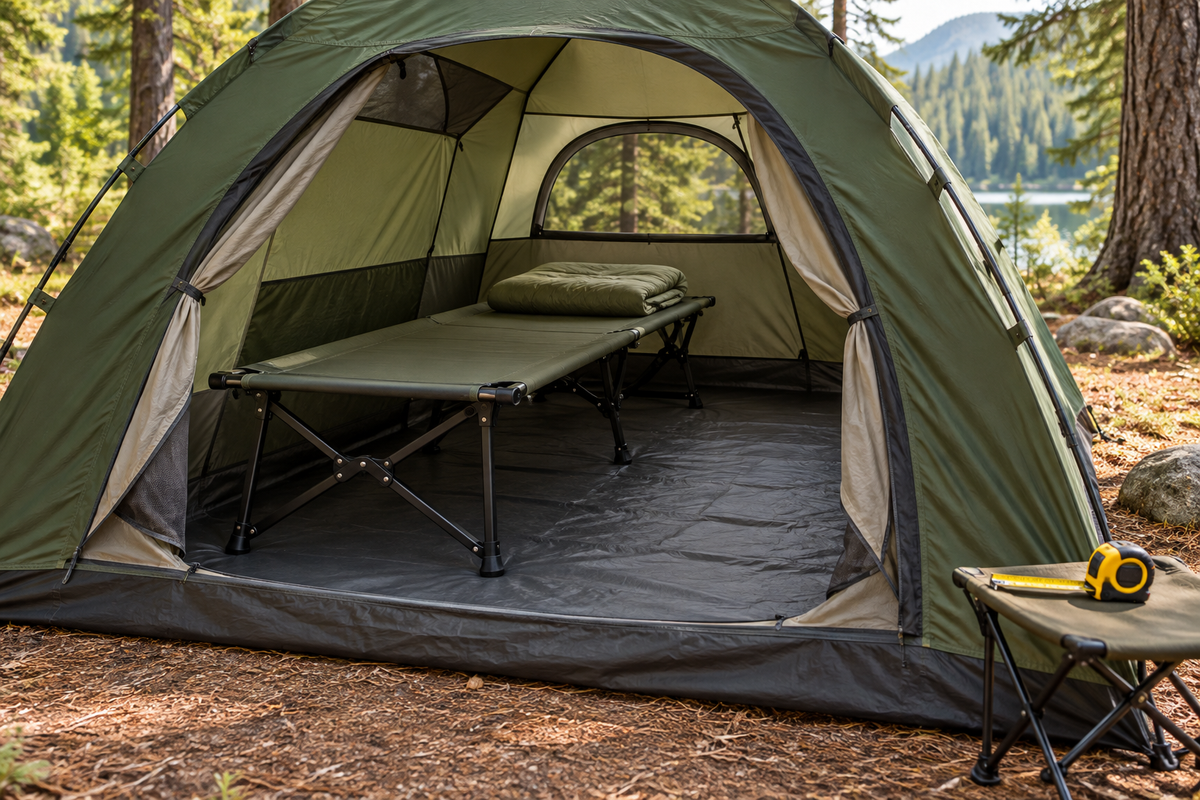
A camping cot can fit within a tent's floor dimensions and still be awkward to use. Sloping walls narrow the space above the ground, a raised bed changes headroom, and the door may no longer have a clear approach once the rest of the gear is inside.
Before choosing a cot, compare the complete sleeping setup with the tent you actually own. A few measurements and a trial pitch are more useful than matching a “two-person” or “four-person” label to the number of beds you hope to carry.
Measure the cot's outside edges
Record the assembled length, width and height, including rails, end bars and any parts that project beyond the fabric. Check whether the published dimensions describe the sleeping surface or the entire frame. Keep the units beside every number, and ask the seller to clarify anything ambiguous.
Then record the packed dimensions and weight separately. A cot that works in the tent may still be difficult to transport alongside poles, bedding and kitchen bins. For a walk-in site, consider the route from the parking area as well as the space in the vehicle.
If you are comparing our XXL folding cot with mattress, confirm the current variant's assembled and folded measurements, instructions and stated load limit before ordering. The words “oversize” and “heavy-duty” do not answer a tent-fit question.
Check the tent at sleeping height
Pitch the tent properly in a suitable place, following its instructions. Measure the interior where the cot would sit. Do not assume the width at ground level is also available at the height of the cot's side rails, pillow or your shoulders.
A paper floor plan is a useful first screen. Mark the cot's full rectangle, the door, fixed dividers and the gear you expect to keep inside. For a tapered tent, draw the narrower end accurately. Two rectangles that fit on a generic box-shaped drawing may not fit the real shelter.
Next, compare that plan with the upright tent. Look at the space above each end of the cot and along the side nearest the wall. Bedding should fit without being forced into the tent fabric. Do not pull the tent out of its intended shape to accommodate a frame that is too large.
Leave a usable route to the door
Plan how someone will enter, sit down, get into bed and leave again. The remaining floor space needs to work with the door's actual location and opening direction. A layout that requires stepping over another cot or squeezing past exposed frame parts deserves another look.
Include the second sleeper's equipment if you share the tent. Position the beds and bags together during the test instead of checking each cot independently. Keep the exit route clear; spare shoes, a duffel and a lantern can consume the narrow strip that looked adequate on paper.
Also check assembly space. Some cots need room to unfold or tension their frames. Confirm that you can follow the assembly instructions in the chosen location, or that the assembled cot can pass through the opening without forcing the door or poles.
Check the feet and tent floor together
Inspect the cot's contact points before putting it inside. Missing caps, sharp edges, trapped grit or damaged parts need attention under the manufacturer's instructions. Ask the tent and cot makers what floor protection is appropriate for the combination.
Model-specific protection exists for a reason. Snow Peak's cot-leg covers, for example, are described as floor protection for its High Tension Cot. That does not establish that those covers fit another brand or that any improvised pad is suitable.
An outside tent footprint and protection at the cot's feet address different contact points. Do not treat the presence of a footprint as automatic approval for furniture inside. Avoid dragging an assembled cot across the floor, and follow the equipment makers' placement and use directions.
Fit the bedding as well as the frame
Place the intended pad or mattress, sleeping bag and pillow on the cot during the trial. Check that the pad fits within the usable sleeping area and that the complete setup leaves the clearance you planned. A generous mattress can overhang a narrower frame or change the space needed beside a wall.
Keep comfort claims separate from documented insulation information. A raised bed or an included mattress does not, by itself, tell you the thermal performance of the whole sleep system. Look for the maker's relevant specifications and intended use rather than assuming that added height means added warmth.
For comparison, Helinox identifies a particular insulated pad as compatible with its Cot One Convertible and gives that pad an R-value. Compatibility and insulation are separately stated details. Neither should be transferred to an unrelated cot or mattress.
Make the trial pitch count
- Confirm the cot is assembled and used according to its instructions.
- Check frame clearance, bedding clearance and comfortable headroom.
- Try the normal entry and exit route with the planned gear in place.
- Verify suitable floor contact and any required protection.
- Pack everything back into the vehicle or carry system.
Save a photo of the successful layout and the measurements that mattered. If the arrangement only works with bags outside, decide where they can appropriately go at the actual campground before departure. A good fit is a setup you can assemble, sleep in and move around without a nightly furniture puzzle.
Cover: original conceptual illustration. It is not a scale drawing or a compatibility recommendation for a particular tent and cot.


 Tents & Shelter
 Sleep Systems
 Packs & Hiking
 Camp Kitchen
 Light & Power
 Survival & Skills
 Camping 101
 Fishing