

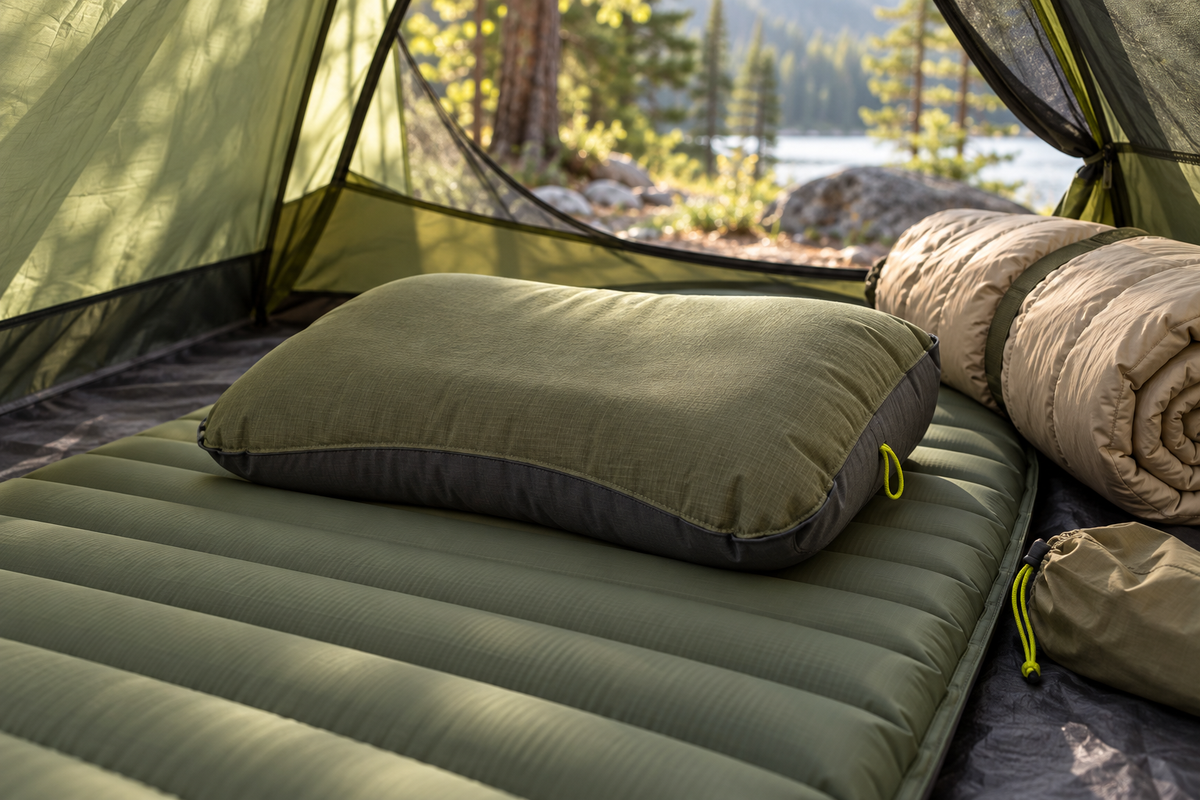
A camping pillow can feel pleasant in your hand and quite different once it is on a sleeping pad inside a sleeping bag. The height, cover, shape and space around your head all become more noticeable when you lie down. Before choosing by packed size alone, try the pillow as part of the sleep setup you actually plan to use.
The aim is a personal comfort check, not a promise of better sleep or a treatment for pain. There is no single pillow height that suits every camper, pad and sleeping position. A short rehearsal at home gives you more useful information than a product photograph.
Start with the trip's packing limits
Decide whether this is a backpacking purchase, a car-camping purchase or one pillow expected to do both jobs. If you drive directly to the site and already own a suitable pillow, you may not need a specialized replacement. Check whether it fits your bedding and whether you can keep it clean and dry in transit.
For a carried setup, record the pillow's weight and packed dimensions alongside its usable size. Include a cover or carry pouch if you intend to bring one. Compare the complete package with the space available in your pack rather than treating the smallest advertised measurement as the deciding factor.
Give the pillow a specific place on the packing list. It should not be the loose item discovered on the bed after the rest of the gear has gone into the car.
Rebuild your sleeping arrangement at home
Lay out the pad, sleeping bag or quilt, pillow and any normal sleep clothing on a clean, suitable surface. Prepare each item according to its instructions. Use the same pillowcase you expect to take, since a bare display sample may feel different from the finished setup.
Lie in your usual position, then change position as you normally would. Notice whether the pillow stays where you want it, whether its edge presses against the sleeping-bag hood and whether you keep rearranging it. Leave enough time to notice the small annoyances instead of judging it with one quick squeeze.
If you use a cot, test the complete arrangement on that cot. Our cot and tent clearance guide can help you check the larger setup before you focus on its smallest part.
Adjust one thing at a time
For a pillow that allows firmness adjustment, follow its inflation and adjustment instructions. Change the fill gradually and compare the result in the same resting position. Do not use an arbitrary pressure or a universal “percent full” rule across different products.
With a filled pillow, check whether its intended adjustment system changes the shape or height in a useful way. Do not remove filling, alter seams or assume a travel pillow is designed to be modified. A shape that cannot be adjusted to your preference may simply be the wrong choice for this setup.
Keep a few plain-language notes: “too tall with this pad,” “edge fits inside the hood,” or “cover feels comfortable.” These observations are easier to compare later than a vague rating such as “premium.” Stop the trial if it feels uncomfortable.
Notice movement, texture and small sounds
Turn your head and move between your normal resting positions. Does the pillow slide toward the edge of the pad? Does the fabric feel different against your face than it did against your hand? Is there a rustling sound you would rather avoid in a shared tent?
Check any attachment feature against both manufacturers' instructions. A strap, sleeve or patch system may depend on a particular pillow and pad combination. Do not add adhesives, pierce an inflatable surface or improvise a tight restraint to correct a fit problem.
These details are personal preferences, not universal defects. Two campers can reasonably choose different pillows after trying them on the same pad.
Read the care label before committing
Find out which parts can be washed and how they must dry. A removable cover and the pillow beneath it may have different instructions. Keep those directions with your gear record instead of relying on a general camping-cleaning tip.
As one manufacturer-specific example, Sea to Summit's pillow guidance distinguishes machine-washable Foam Core pillows from Aeros pillows that should be hand washed. That distinction illustrates why a care method should not be transferred from one construction to another. Follow the directions for the exact pillow you own.
Also check the required storage method. Your travel packing arrangement may not be the recommended long-term storage arrangement. Add the pillow to your post-trip gear reset so cleaning and drying do not get forgotten.
Use a five-point decision card
- Trip: Car camping, backpacking or both.
- Fit: Works with your pad, bedding and resting positions.
- Feel: Acceptable height, texture, movement and sound.
- Packing: Complete weight, packed size and a planned place.
- Care: Readable cleaning, drying and storage instructions.
Compare these notes before buying another sleep accessory. The right choice is the one you have good reasons to pack, can look after and have checked with the rest of your bedding.
Cover: conceptual camping sleep setup, not a specific product or a tested comfort claim.


 Tents & Shelter
 Sleep Systems
 Packs & Hiking
 Camp Kitchen
 Light & Power
 Survival & Skills
 Camping 101
 Fishing