

The last job of a camping weekend happens after you get home. Wet fabric, the spoon that disappeared into a side pocket and a headlamp with an uncertain charge all need attention before the gear goes back on the shelf.
A useful post-trip reset has two stages: deal with anything damp or dirty first, then sort and restock once the equipment is ready for storage. Trying to close every storage bin immediately can hide the very problems you want to find.
Unload into three simple groups
Choose a clear area and separate gear into “dry and ready,” “needs cleaning or drying,” and “needs attention.” A towel, empty tote or section of floor is enough to mark each group. Keep food and used kitchen items separate from sleep equipment.
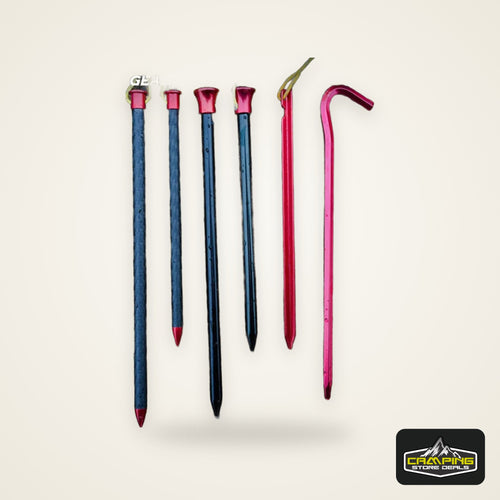
The third group is important. A bent tent stake, a missing buckle or a lantern that behaved unpredictably should not disappear into the ordinary packing pile. Put a note with the item while the problem is fresh in your mind. Describe what happened rather than guessing at the cause.
If the household is busy when you arrive, prioritize unloading wet equipment and dealing with food. The detailed inventory can wait; a tightly packed, damp shelter should not.
Give the shelter room to dry
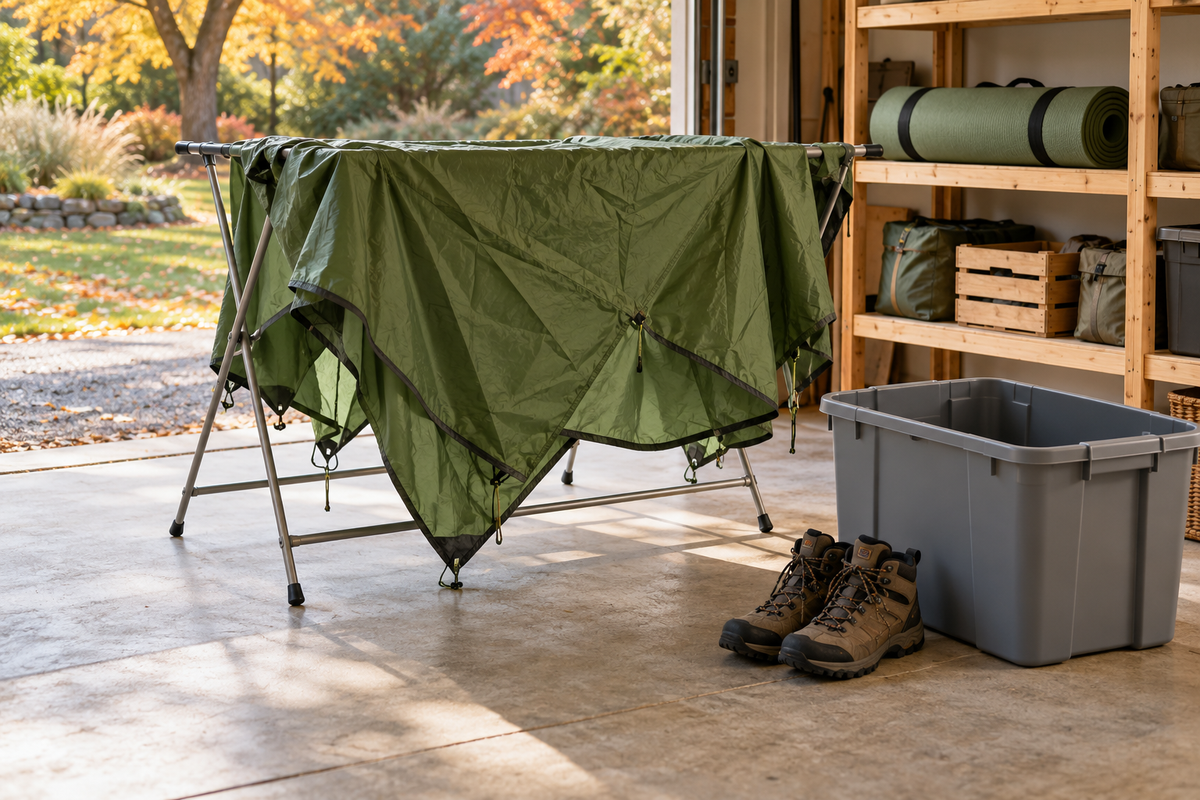
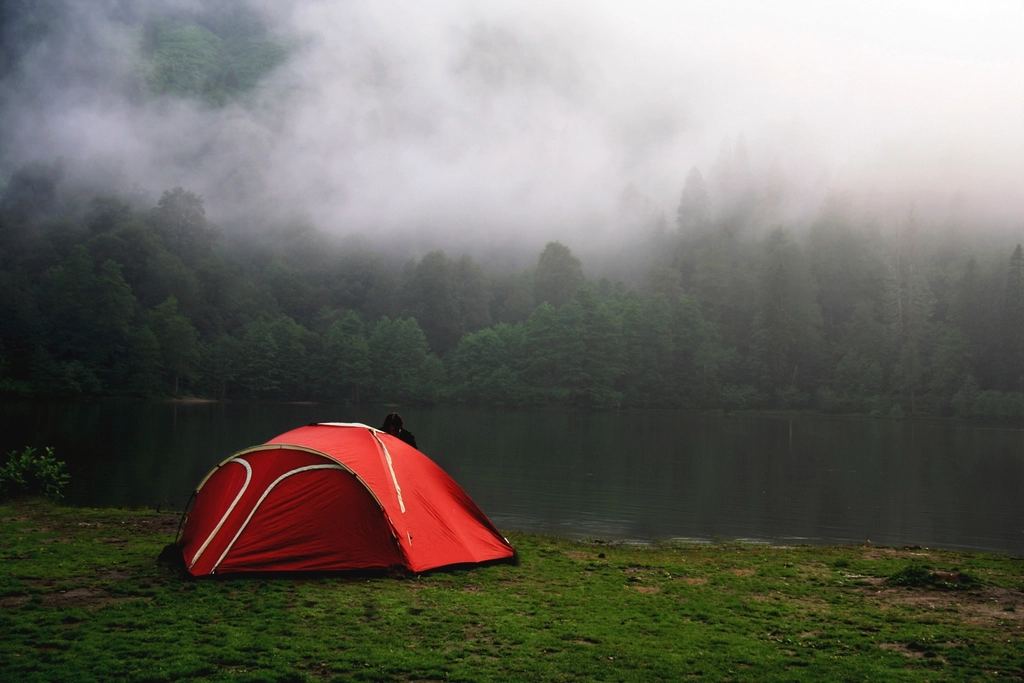
Separate the tent body, rainfly and footprint where the design allows. Open out folds and check corners and pockets rather than judging dryness from the outermost panel. Pitch the tent in a suitable shaded space or drape fabric carefully where air can circulate, following its care instructions.
MSR's tent-care guidance emphasizes dry storage and warns that prolonged moisture can damage waterproof coatings. Its cleaning instructions also rule out machine washing and machine drying for its tents. Use your own tent manufacturer's directions for cleaners and methods; a household laundry routine is not automatically suitable for coated fabric.
Brush away loose grit where appropriate and look for anything that needs repair. Keep poles, stakes and their bags together as they are cleaned and dried. Before storing the shelter, check both sides of folded areas and the underside of the floor. If something is still damp, leave that part out to finish drying.
Let the sleep system recover separately
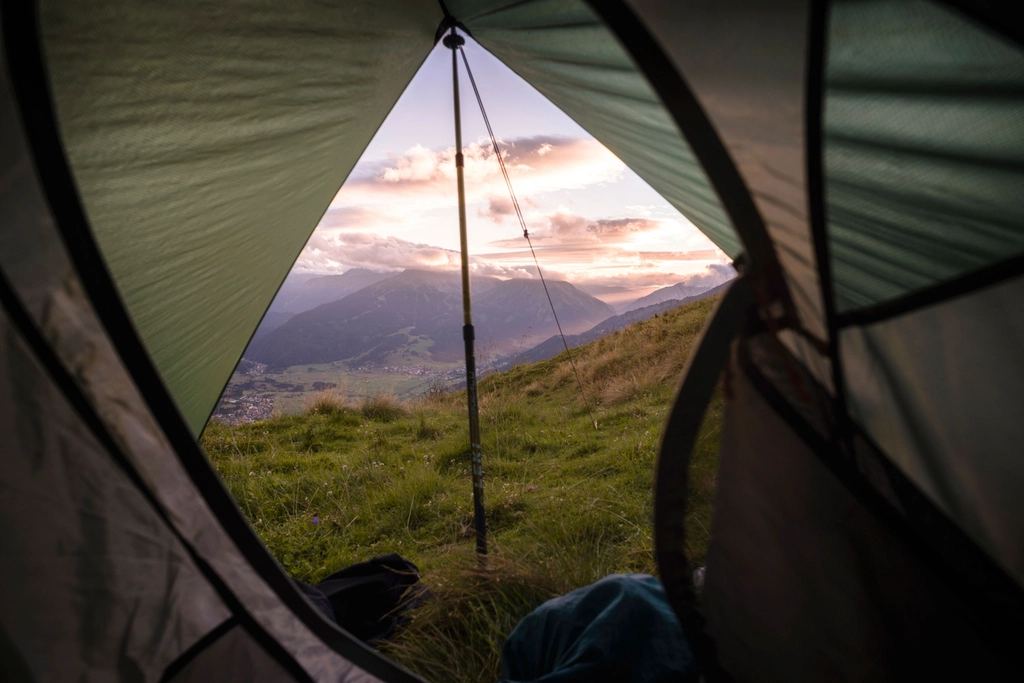
Take sleeping bags and quilts out of their travel sacks. Inspect them for damp spots or spills and follow the maker's care label. A full wash is a separate job that needs the right method, rather than an automatic step after every outing.
For its sleeping bags, Therm-a-Rest recommends roomy storage that avoids compressing the insulation. Check whether your bag came with both a small travel sack and a larger storage sack. They serve different purposes.
Give sleeping pads their own check. Note a suspected slow leak, a valve that did not behave normally or a missing repair pouch. Use the pad's instructions for cleaning and storage, since air pads, self-inflating pads and foam mats do not all need the same treatment. Keep any repair task visible until it has actually been completed and checked.
Reset the kitchen as a complete kit
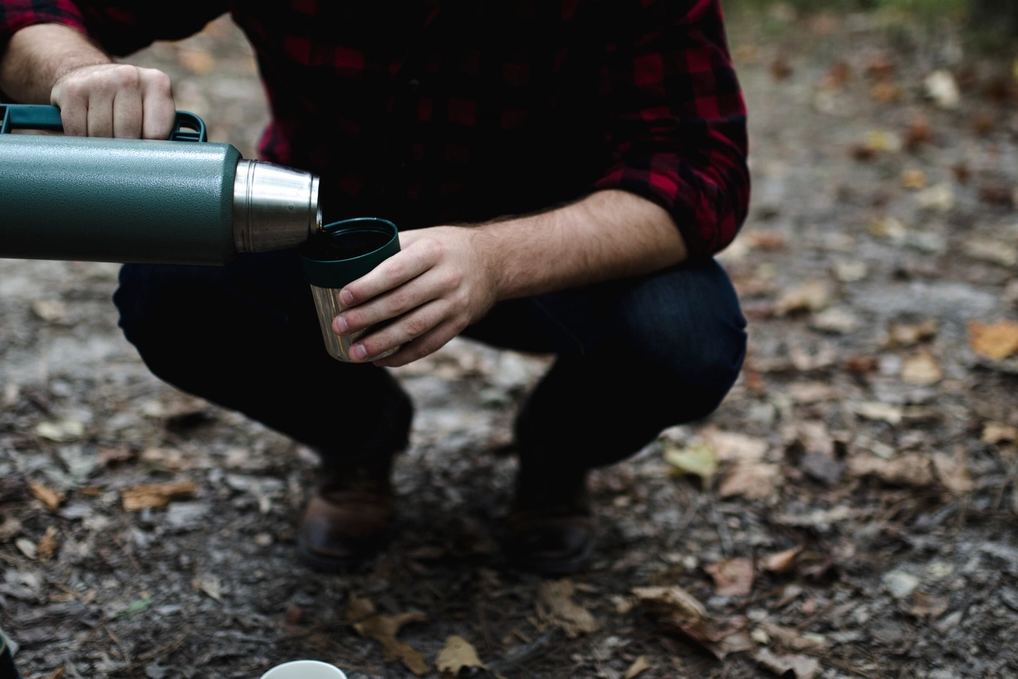
Empty the cooler and food containers, wash suitable cookware and utensils, and let everything dry fully before packing. Inspect the small parts that are easy to overlook: lid seals, folding handles, mugs, wash basins and cutlery pouches.
Count the kit as if you were about to make the first meal of the next trip. Do you have the pot lid, the opening tool needed for your food, and enough mugs? Write down what was awkward to use while you still remember it. This is a better guide to future purchases than adding another gadget because it fits an empty compartment.
Store stoves and fuel according to their manufacturers' directions and local requirements. Keep fuel out of the general household gear tote. A camping checklist is not a substitute for a fuel container's storage instructions.
Make a short repair and replacement list
Use three columns in your notes: item, issue and next action. “Tent stake missing; count remaining stakes; replace matching size if needed” is clearer than “tent stuff.” Record model numbers when a replacement must match a particular tent, pad or light.
Check headlamps, lanterns and power banks using their instructions. Record charging needs, damaged cables or replacement batteries instead of assuming that an item switched off at home is ready for the next outing. Do not use or recharge visibly damaged batteries.
Keep this list short enough to finish. If something was merely inconvenient, note it separately from equipment that needs attention before it can be used again.
Store for the next trip, not just for a tidy shelf
Once everything is ready, group equipment by the way you unpack at camp: shelter, sleep, kitchen and lighting. Keep the printed or saved checklist with the kit. Put a clear note on any incomplete bag so another person does not assume it is ready to load.
Finally, write three quick observations: what you used most, what stayed untouched and what you wished you had. When you plan another fall camping trip, those notes will be more useful than a vague memory of the weekend. A good reset leaves you with dry gear, an honest inventory and fewer surprises at the next campsite.


 Tents & Shelter
 Sleep Systems
 Packs & Hiking
 Camp Kitchen
 Light & Power
 Survival & Skills
 Camping 101
 Fishing