

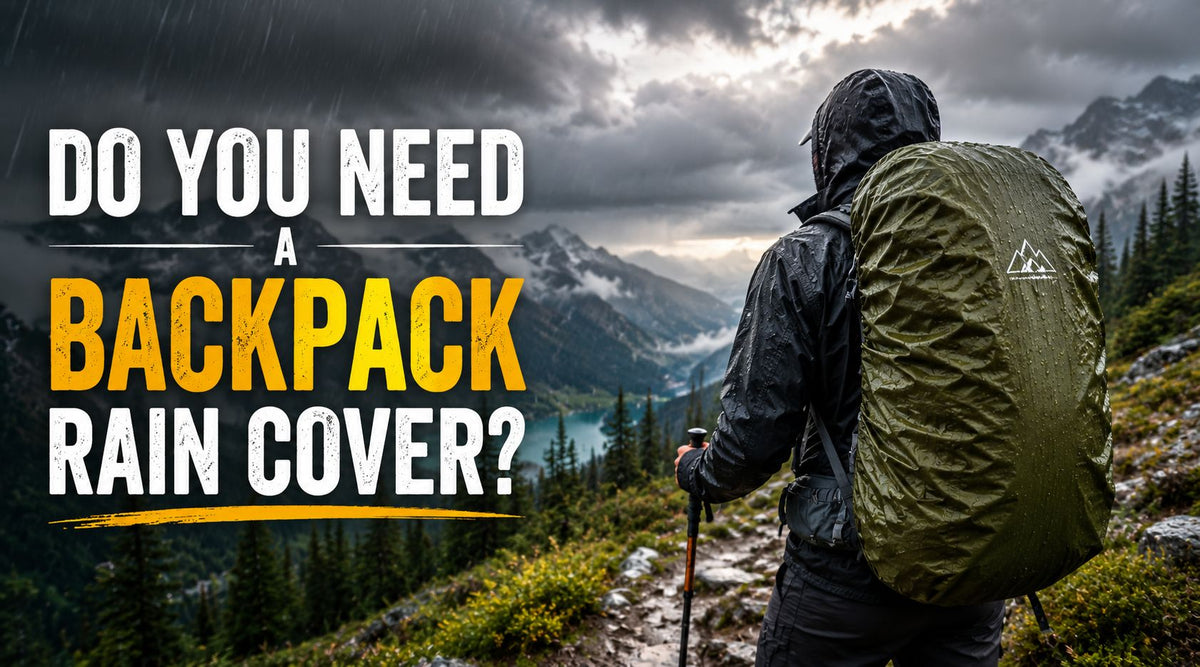
You check the forecast, see a chance of rain, and wonder if your pack can handle it on its own. This backpack rain cover guide answers that question directly, walking through when a cover actually matters, how it compares to a pack's built in water resistance, and what to look for if you decide you need one.
By the end, you will know whether your setup needs extra protection, and you can browse our Backpack Accessories collection to find a cover that fits your pack.
What a Backpack Rain Cover Actually Does
A rain cover is a lightweight, waterproof shell that stretches over the outside of your pack, shielding it from rain, snow, and general moisture. Most are made from ripstop nylon or a similar coated fabric, with an elastic hem or drawstring that cinches around the bottom of the pack to hold it in place.
Unlike a pack liner, which protects the inside of your bag, a rain cover protects the outer shell and everything strapped to the outside, like a sleeping pad or trekking poles, from getting soaked in the first place.
Do You Really Need One
This depends heavily on your pack, your trip, and the weather you expect to hike in.
If your pack is labeled water resistant but not fully waterproof, which describes most backpacking and hiking packs, a rain cover adds meaningful extra protection during sustained rain. Water resistant coatings shed light moisture well, but seams, zippers, and stitching are still vulnerable points where water can get in over time.
If you are hiking in a region with unpredictable weather or planning a multi day trip where you cannot simply wait out a storm indoors, a rain cover is worth carrying even if you do not expect to use it every time.
If your trip is short, in a dry climate, or your pack is already fully waterproof, you may be able to skip a dedicated cover and rely on your pack's built in protection along with dry bags for sensitive items inside.
Rain Cover vs Waterproof Pack Fabric
It helps to understand the difference between a pack marketed as waterproof and one that is water resistant.
Water resistant fabric repels light rain and splashes for a limited time, but it is not designed to hold up against sustained downpours, and seams are rarely fully sealed.
Fully waterproof packs use welded seams and specialized coated fabric to keep water out even during heavy, extended rain, but these packs tend to be heavier and more expensive.
A rain cover offers a middle ground. It lets you use a lighter, more affordable water resistant pack most of the time, while still having real protection available when the weather turns.
Key Features to Look for in a Rain Cover
Proper sizing. Rain covers are typically sized by liter capacity, so match the cover to your pack's actual volume rather than guessing. A cover that is too small will not fully close, and one that is too large can flap loosely in wind.
Elastic hem or drawstring closure. A snug, adjustable closure keeps the cover secure in wind and prevents it from sliding off during movement.
Bright color or reflective strip. Since a cover goes over your pack's usual color, a bright or reflective design also improves visibility on trails or roadside sections of a hike.
Compact storage. Most rain covers pack down into their own small pouch, so look for one that stores easily in a hip belt pocket or top lid for quick access.
Durable, tear resistant material. Since a rain cover is exposed to branches, rocks, and repeated use, a slightly heavier duty fabric will last longer than an ultra thin budget option.
How to Use a Rain Cover Effectively
Pack your rain cover somewhere easily accessible, like a hip belt pocket or the very top of your main compartment, since digging through a full pack in the rain defeats the purpose of quick protection. Put the cover on before rain becomes heavy rather than waiting until your pack is already wet, since covers work best as prevention rather than damage control.
It also helps to pair a rain cover with a pack liner or a few dry bags for anything that absolutely cannot get wet, like electronics or a sleeping bag, since a rain cover reduces exposure but rarely creates a fully sealed environment.
Common Mistakes With Backpack Rain Covers
Assuming a water resistant pack does not need one. Water resistant fabric handles light moisture, but it is not built for sustained rain, which is exactly when a cover matters most.
Buying the wrong size. A poorly fitted cover can shift or expose parts of the pack, undermining the protection it is meant to provide.
Forgetting to pack it where you can reach it. A rain cover buried at the bottom of your bag is not useful once rain has already started.
Relying on a cover alone for sensitive gear. Pairing a cover with a pack liner or dry bags gives you a much more reliable level of protection for anything that truly cannot get wet.
What to Pair With a Rain Cover
For complete weather protection on the trail, consider combining your rain cover with:
-
A pack liner or large dry bag inside your backpacking pack for an extra layer of protection
-
Smaller dry bags for electronics, maps, or a first aid kit
-
A tent with a reliable rainfly, since your shelter matters just as much as your pack when weather turns
Backpack Rain Cover Guide: Quick Checklist
-
Cover sized to match your pack's liter capacity
-
Elastic hem or drawstring for a secure fit
-
Bright color or reflective detail for visibility
-
Compact storage pouch for easy access
-
Paired with a pack liner or dry bags for sensitive gear
Final Thoughts
This backpack rain cover guide comes down to one simple idea: water resistant is not the same as waterproof, and a rain cover fills that gap affordably and effectively. If you hike regularly, take multi day trips, or simply want peace of mind against unpredictable weather, a properly sized rain cover is a small addition that protects a much bigger investment.
Ready to add one to your kit? Browse our full Backpack Accessories collection and find a rain cover that fits your pack.


 Tents & Shelter
 Sleep Systems
 Packs & Hiking
 Camp Kitchen
 Light & Power
 Survival & Skills
 Camping 101
 Fishing