

Your footwear decides how your feet feel at mile ten, which in turn decides how much you enjoy the hike. There is a lot of strong opinion online, from "boots are the only safe choice" to "real hikers wear trail runners". The truth is simpler: each style suits certain trails, loads and conditions.
This guide compares the three main options so you can choose with confidence. Shop our hiking footwear and trail shoes.
The three main options
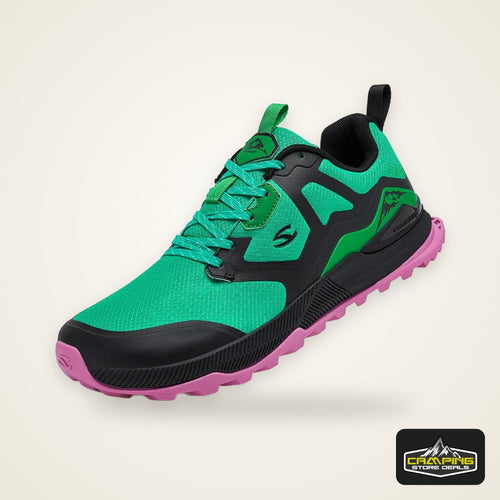
- Trail runners: running shoes built for dirt, with grippy outsoles and some underfoot protection.
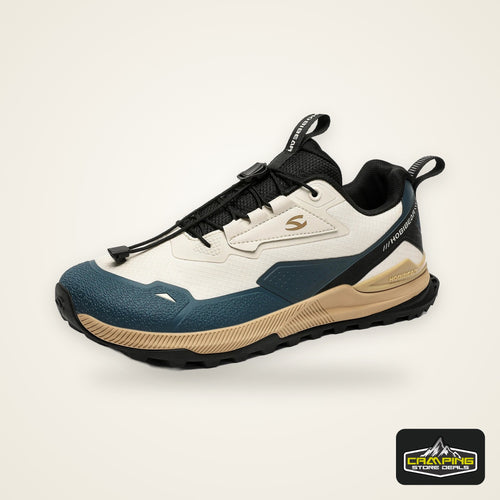
- Hiking shoes: low-cut shoes that are a little stiffer and sturdier than trail runners.
- Hiking boots: mid or high-cut footwear with more ankle coverage, stiffer soles and more protection.
Side-by-side comparison
| Trail runners | Hiking shoes | Hiking boots | |
|---|---|---|---|
| Weight | Lightest | Light to moderate | Heaviest |
| Breathability | Excellent | Good | Fair to good |
| Drying time | Fast | Moderate | Slow |
| Ankle coverage | None | None | Good |
| Underfoot protection | Moderate | Good | Excellent |
| Best for | Maintained trails, light loads, hot weather | Day hikes, mixed terrain | Heavy loads, rough terrain, cold, snow |
When trail runners make sense
Trail runners feel nimble and need almost no break-in. Because they breathe well and drain quickly, many long-distance hikers prefer them, especially in warm weather. There is an old rule of thumb that weight on your feet is far more tiring than the same weight on your back, which is one reason lighter shoes are so popular.
When hiking boots make sense
Boots shine when you are carrying a heavy pack, scrambling over loose rock or traveling off trail. The stiffer sole spreads pressure over sharp terrain, higher cuts keep out debris and snow, and the extra structure adds stability on uneven ground. They are also the warmer choice for cold and winter hiking, and many work with traction devices.
Waterproof or breathable?
Waterproof membranes keep feet dry in puddles, dew, mud and snow. The tradeoff is warmth and drying time: they trap more heat in summer, and once water gets in over the top, they take longer to dry. Many experienced hikers choose waterproof footwear for cold, wet seasons and breathable mesh for hot weather and trips with stream crossings.
How to get the right fit
- Shop later in the day when your feet are slightly swollen.
- Wear the socks you hike in.
- Leave roughly a thumb's width of space in front of your longest toe so your toes do not hit the front on descents.
- Your heel should stay put without slipping when you walk uphill.
- Walk on an incline if you can, and wear new footwear on short hikes before a big trip.
Pro tip: lacing techniques can solve many fit problems. A surgeon's knot at the top of the forefoot locks your heel in place on long descents.
Do not forget socks and extras
Wool or synthetic hiking socks reduce friction and wick sweat. Gaiters keep debris out, and trekking poles take strain off knees and add stability whichever footwear you choose.
Bottom line
Choose trail runners for speed and comfort on well-maintained trails, hiking shoes for everyday versatility and boots for heavy loads, rough terrain and cold weather. Above all, choose the pair that fits your feet.


 Tents & Shelter
 Sleep Systems
 Packs & Hiking
 Camp Kitchen
 Light & Power
 Survival & Skills
 Camping 101
 Fishing