

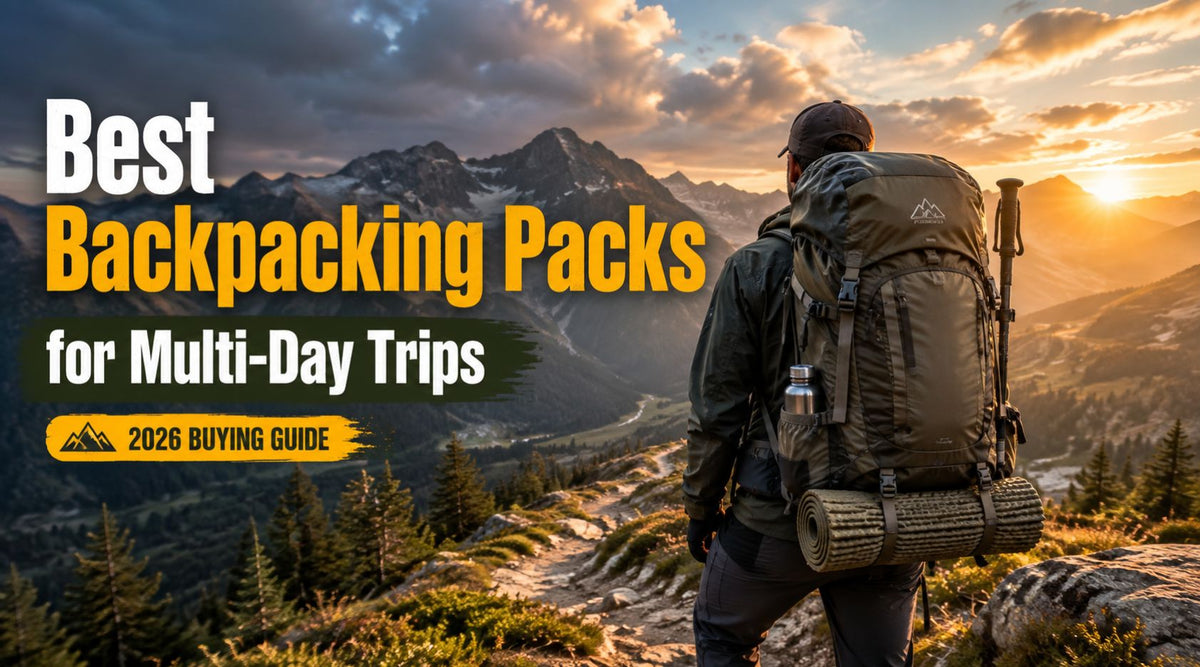
Heading out for two, three, or more nights on the trail requires more than just enthusiasm - it requires the right pack. Choosing the best backpacking pack for multi-day trips can make or break your adventure, since this single piece of gear carries your shelter, food, water, and everything else you'll need to survive comfortably away from civilization.
In this guide, we'll walk through everything you need to know before buying, including capacity, frame type, fit, and the features that actually matter on longer trips. By the end, you'll be ready to browse our full Backpacking Packs collection and pick the pack that's right for you.
Why the Best Backpacking Pack for Multi-Day Trips Matters
A pack built for a day hike simply isn't designed to carry three or four days' worth of gear. Multi-day trips demand a pack that can handle:
-
Extra food, water, and cooking supplies
-
A tent, sleeping bag, and sleeping pad
-
Layers of clothing for changing weather
-
Emergency and first-aid essentials
Choosing the wrong pack often leads to sore shoulders, an aching lower back, and gear that's impossible to organize on the trail. Getting the best backpacking pack for multi-day trips from the start saves you money, discomfort, and frustration down the road.
How to Choose the Best Backpacking Pack for Multi-Day Trips
1. Capacity (Liters)
Pack capacity is measured in liters, and it should match the length of your trip:
-
30–50L Suitable for 1–2 night trips or ultralight packers
-
50–65L The sweet spot for most 2–5 night multi-day trips
-
65L+ Best for week-long trips, winter camping, or carrying gear for others (like kids)
If you're regularly doing 3–5 day trips, a 55–65L pack usually offers the right balance between capacity and manageable weight.
2. Frame Type
Backpacks generally come in two frame styles:
-
Internal frame packs - Hug closer to your body, offer better balance on uneven terrain, and are the most common choice for multi-day backpacking.
-
External frame packs - Better ventilation and easier to strap bulky gear to, but less common today and generally less stable off-trail.
For most hikers, an internal frame pack is the more versatile and comfortable option for multi-day use.
3. Fit and Torso Length
A pack's comfort depends far more on torso length than your height. Look for adjustable suspension systems, and always try to match the hip belt to your actual hip bones — not your waist since a properly fitted hip belt should carry most of the pack's weight, not your shoulders.
4. Weight of the Pack Itself
On multi-day trips, every extra pound matters. Compare the empty weight of packs in the same capacity range; lightweight materials can save a meaningful amount of strain over several days on the trail.
5. Access Points
Top-loading packs are lighter and simpler, while packs with front or side "panel" access make it much easier to grab gear without unpacking everything, a big advantage on multi-day trips when you're setting up and breaking camp daily.
Key Features to Look For
-
Adjustable suspension system for a customized, comfortable fit
-
Multiple compression straps to stabilize the load as food and fuel are used up
-
Hip belt pockets for quick access to snacks, a phone, or a map
-
Hydration reservoir sleeve to pair with a hydration pack or bladder
-
External attachment points for trekking poles, an ice axe, or a sleeping pad
-
Rain cover or water-resistant fabric to protect gear during unexpected weather
Common Mistakes When Buying a Multi-Day Backpacking Pack
-
Choosing based on liters alone - Fit matters more than capacity. A perfectly-sized 55L pack will feel better than a poorly-fitted 65L pack.
-
Ignoring the hip belt - A weak or poorly padded hip belt shifts weight to your shoulders, leading to fatigue much faster.
-
Overpacking to fill extra space - A bigger pack often tempts hikers to bring more than they need, adding unnecessary weight.
-
Skipping a trial pack-and-walk - Always load the pack with your actual gear and walk around before your trip to test comfort.
-
Forgetting about pack weight itself - A heavy empty pack eats into your total weight budget before you've even added gear.
What to Pair With Your Backpacking Pack
A great pack is only one part of a complete multi-day setup. To get the most out of your trip, consider pairing it with:
-
A reliable tent sized for your group
-
A sleeping bag rated for your expected temperatures
-
A sleeping pad for insulation and comfort
-
A hydration pack or bladder for hands-free drinking on the move
-
Useful add-ons from our Backpack Accessories collection like rain covers, compression sacks, and pack liners
Building your kit around a properly chosen pack ensures everything fits, balances well, and stays protected for the length of your trip.
Best Backpacking Pack for Multi-Day Trips: Buying Checklist
Before you buy, run through this quick checklist:
-
✅ Capacity matched to trip length (aim for 55–65L for most multi-day trips)
-
✅ Internal frame for stability on varied terrain
-
✅ Properly fitted torso length and hip belt
-
✅ Multiple access points for easy packing/unpacking
-
✅ Hydration reservoir compatibility
-
✅ Attachment points for poles, pads, and extra gear
Final Thoughts
Finding the best backpacking pack for multi-day trips comes down to matching capacity to your trip length, choosing the right frame type, and prioritizing a proper fit over flashy features. A well-chosen pack distributes weight comfortably, keeps your gear organized, and lets you focus on the trail instead of your aching shoulders.
Ready to gear up? Browse our full Backpacking Packs collection and find the perfect pack for your next multi-day adventure.


 Tents & Shelter
 Sleep Systems
 Packs & Hiking
 Camp Kitchen
 Light & Power
 Survival & Skills
 Camping 101
 Fishing