

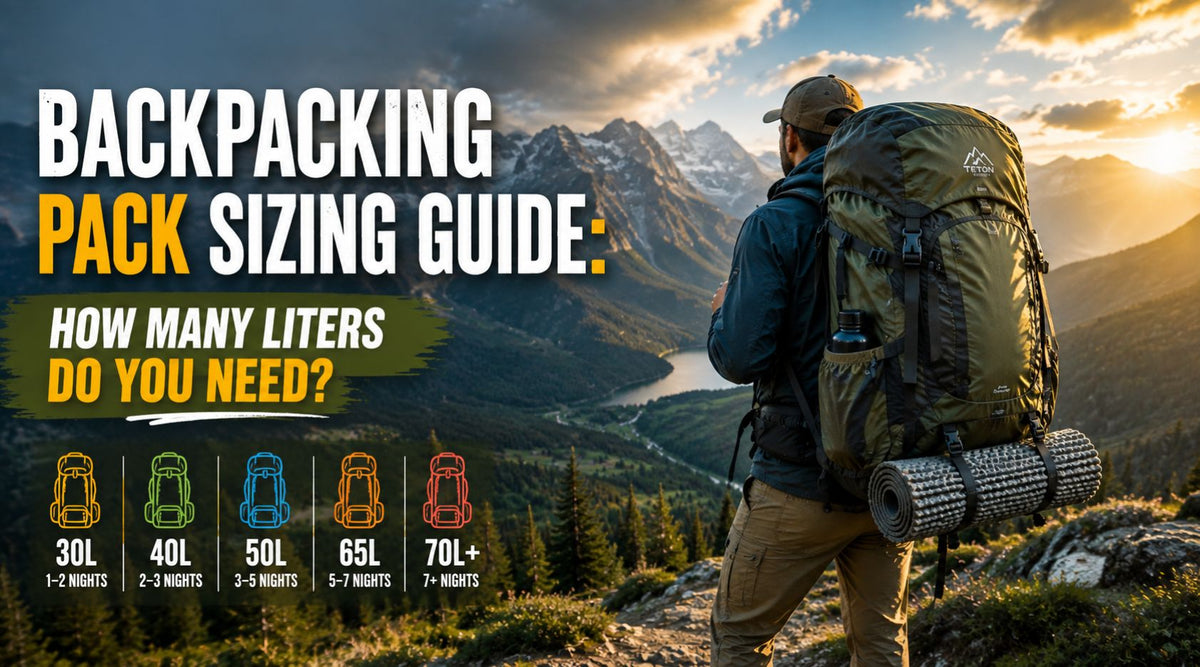
Picking the right pack size is one of the most confusing parts of gearing up for a trip. Too small, and you will be strapping gear to the outside or leaving essentials behind. Too big, and you will end up carrying extra weight you do not need. This backpacking pack sizing guide will walk you through exactly how to match liters to your trip length, body type, and load, so you can buy with confidence.
By the end of this guide, you will know how to read a capacity label, how torso length affects fit, and how to browse our Backpacking Packs collection and pick the right size the first time.
Why a Backpacking Pack Sizing Guide Matters
Pack capacity is measured in liters, and that number tells you how much total volume the pack can hold, not how much weight it can comfortably carry. A lot of first time buyers assume bigger is always safer, but an oversized pack often leads to overpacking, poor weight distribution, and unnecessary strain on the shoulders and hips.
On the other hand, a pack that is too small will not fit your sleeping bag, tent, food, and layers, forcing you to compress gear in ways that damage it or leave it exposed to weather. Getting the size right from the start saves money, protects your gear, and makes every mile on the trail more comfortable.
Backpacking Pack Sizing Guide: Liters by Trip Length
Here is a simple breakdown based on how many nights you plan to be out.
1 to 2 nights: 30 to 50 liters This range works well for short trips, warm weather, or ultralight packers who have already dialed in a minimal gear list. It is also a good size for experienced backpackers who know exactly what they need and nothing more.
2 to 5 nights: 50 to 65 liters This is the most common range for the average backpacker. It gives you enough room for a tent, sleeping bag, sleeping pad, food, and clothing layers, without becoming unmanageably heavy.
5 nights or longer: 65 to 80 liters Extended trips, winter conditions, or trips where you are carrying gear for a child or a shared item like a stove or water filter usually call for this range. These packs offer the most storage but also require a stronger frame and hip belt to carry the extra load comfortably.
80 liters and above: Expedition packs These are built for multi week trips, mountaineering expeditions, or situations where you need to carry technical gear alongside standard camping essentials. Most weekend or week long backpackers will never need a pack this large.
Matching Pack Size to Season and Conditions
Trip length is not the only factor. Season and climate change how much gear you need to carry, even for the same number of nights.
Warm weather trips usually need less insulation and fewer layers, so you can often size down within your trip length range.
Cold weather or winter trips require a heavier sleeping bag, extra insulating layers, and sometimes specialized gear like snow stakes or a four season tent. For the same trip length, plan to size up by 10 to 15 liters compared to a warm weather trip.
Wet or unpredictable climates may call for extra rain gear and dry bags, which take up more space than most people expect. If you often hike in rainy regions, lean toward the higher end of your trip length range.
How Torso Length Affects Backpacking Pack Sizing
Liters tell you how much a pack holds, but torso length determines whether the pack actually fits your body. Two hikers of the same height can need completely different pack sizes because torso length varies independently of overall height.
To find your torso length, measure from the bony bump at the base of your neck down to the point level with the top of your hip bones. Most packs list a torso length range, often labeled small, medium, or large, and many models include an adjustable suspension system that lets you fine tune the fit.
A pack that matches your torso length will let the hip belt sit properly on your hips, which is where most of the weight should rest, not on your shoulders.
Common Backpacking Pack Sizing Mistakes
Buying based on liters alone. A 65 liter pack that does not match your torso length will feel worse than a well fitted 50 liter pack.
Sizing up "just in case." Extra space often gets filled with items you do not need, adding weight without adding value.
Ignoring the hip belt fit. Even a correctly sized pack will feel uncomfortable if the hip belt does not sit properly on the hip bones.
Not accounting for shared gear. If you are splitting a tent or stove with a hiking partner, factor that weight and space into your sizing decision.
Overlooking compression straps. A pack with good compression straps can handle a range of loads more comfortably, since it can cinch down when you are carrying less.
What to Pair With the Right Size Pack
Once you know your ideal capacity, build out the rest of your kit to match:
-
A sleeping bag rated for the season you are packing for
-
A compact sleeping pad that will not eat up your available space
-
A tent sized appropriately for your group
-
A hydration pack or bladder if your main pack does not include one
-
Compression sacks or dry bags from our Backpack Accessories collection to make the most of your space
Backpacking Pack Sizing Guide: Quick Reference Checklist
-
1 to 2 nights: 30 to 50 liters
-
2 to 5 nights: 50 to 65 liters
-
5 or more nights: 65 to 80 liters
-
Cold weather trips: add 10 to 15 liters to your baseline
-
Always measure torso length before choosing a size
-
Prioritize hip belt fit over total capacity
Final Thoughts
This backpacking pack sizing guide comes down to three things: matching liters to your trip length, adjusting for season and conditions, and making sure the pack fits your torso, not just your gear list. Get those three right, and you will end up with a pack that feels balanced, comfortable, and ready for whatever trip you have planned.
Ready to find your size? Browse our full Backpacking Packs collection and pick the capacity that matches your next adventure.


 Tents & Shelter
 Sleep Systems
 Packs & Hiking
 Camp Kitchen
 Light & Power
 Survival & Skills
 Camping 101
 Fishing