

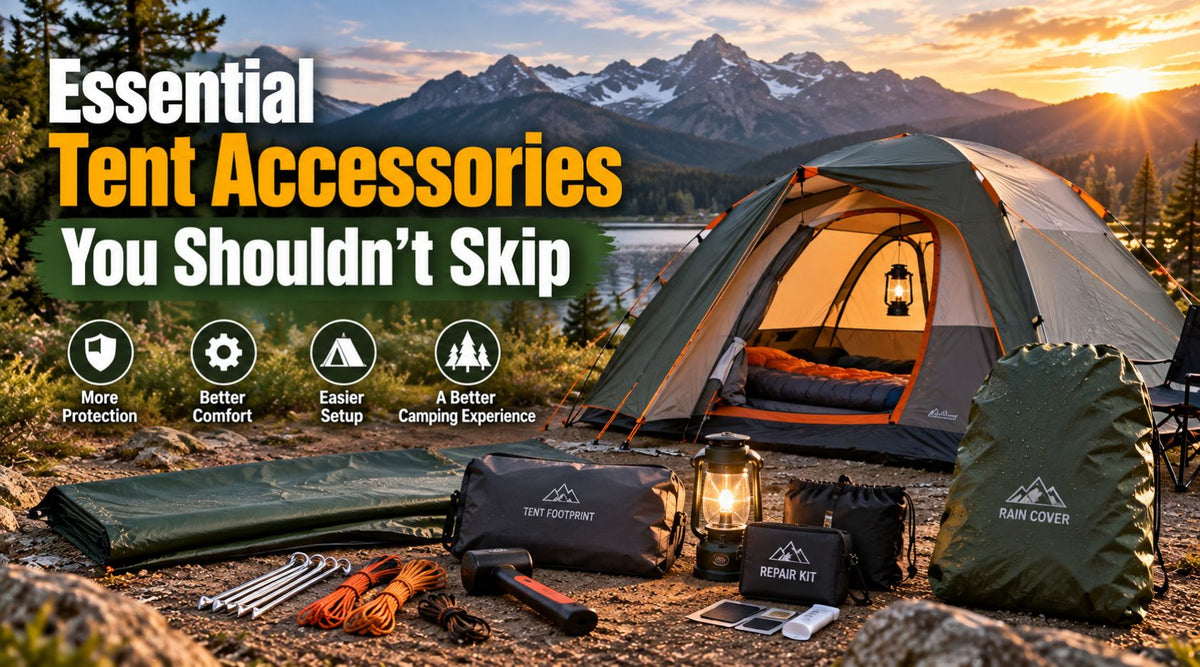
A tent on its own can only do so much. The small accessories that go with it are often what determine whether your tent survives a windy night, stays dry through a storm, or lasts for five seasons instead of one. This guide covers the essential tent accessories worth adding to your setup, from basic hardware to comfort upgrades, so you are not caught unprepared on your next trip.
By the end, you will know exactly what belongs in a well rounded tent kit, and you can browse our Tent Accessories collection to fill in whatever your current setup is missing.
Why Tent Accessories Matter More Than People Expect
Most tent problems on the trail are not caused by the tent itself, but by missing or failing accessories. A bent stake, a snapped pole, or a leaky seam can turn a comfortable trip into a miserable one, even with an otherwise high quality tent. The right camping tent accessories protect your investment, extend the tent's usable life, and solve the small but frustrating issues that tend to show up exactly when you cannot easily replace them.
Think of accessories as the supporting system that lets your tent actually perform the way it was designed to, since even the best built tent depends on stakes holding firm, poles staying intact, and seams keeping water out over repeated use.
Stakes and Ground Anchors
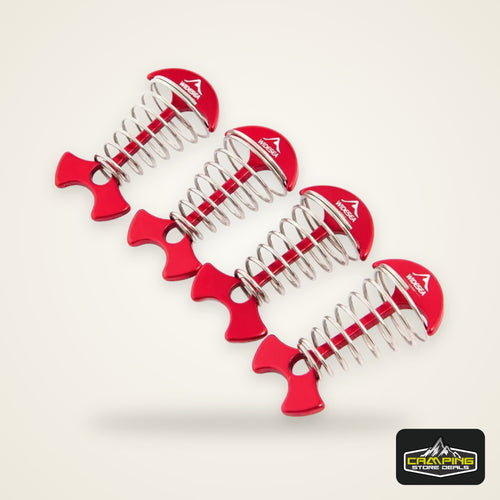
Standard stakes that come with most tents are often a basic, one size fits all design. Upgrading to stakes suited for your typical terrain, whether that is sand, rocky ground, or soft soil, makes a noticeable difference in how securely your tent holds during wind. Lightweight aluminum stakes work well in most conditions, while heavier steel stakes offer more holding power in hard or compacted ground, at the cost of a bit of extra weight.
Sand or snow stakes are wider and flatter, designed to grip loose ground that standard stakes pull out of easily. These are worth carrying separately if you camp in variable terrain across different trips, since a single stake style rarely performs well everywhere.
Stake pullers or a small mallet save time and frustration when packing up, especially in hard or rocky ground where stakes can be difficult to remove by hand. A mallet also makes initial setup faster in firm soil, reducing the risk of bent stakes from repeated hammering with a rock or boot heel.
Guy Lines and Tensioning Hardware
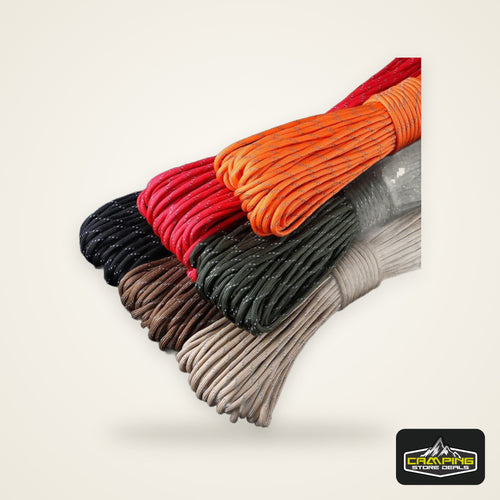
Reflective guy lines improve visibility at night, reducing the chance of tripping over a taut line near your tent, especially useful at busy campsites or when moving around camp after dark.
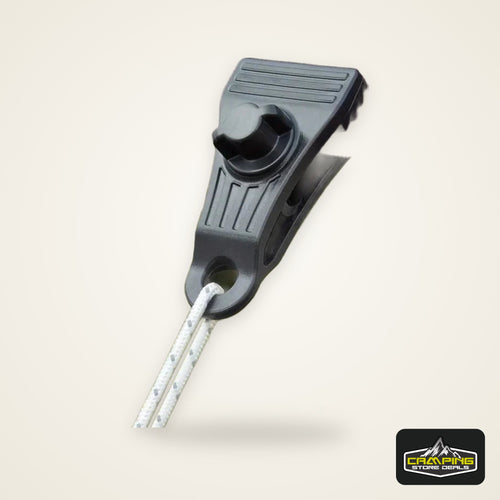
Tensioners or line locks let you adjust guy line tightness quickly without retying knots, which matters when wind picks up and you need to secure your tent fast. These small plastic or metal sliders are inexpensive but make a meaningful difference in how quickly you can respond to changing conditions overnight.
Extra cordage is worth carrying as a backup, since a snapped or lost guy line can leave part of your tent under tensioned and more vulnerable to wind. A short length of paracord weighs almost nothing and can double as an emergency repair for other gear if needed.
Pole Repair and Replacement Accessories
Pole repair sleeves are small tubes that slide over a cracked or broken pole section, providing a temporary but often trip saving fix until you can properly replace the pole. These are inexpensive and take up almost no space, making them one of the highest value accessories relative to their size.
Replacement pole segments matched to your tent's pole diameter are worth having on longer trips, particularly in remote areas where a broken pole could otherwise end a trip early. Checking your tent's pole specifications before a trip, rather than after a break, makes it much easier to source the correct replacement in advance.
Shock cord inside collapsible poles wears out over time. A small repair kit or replacement cord keeps poles snapping together properly instead of coming apart at the joints, which becomes more common as a tent ages through repeated use.
Ground Protection Accessories
Footprints or ground tarps cut to match your tent's floor dimensions protect against punctures, abrasion, and ground moisture, extending the life of the tent floor significantly. Placing the footprint slightly smaller than the tent's actual footprint, rather than letting it extend beyond the edges, also helps prevent rainwater from pooling underneath during storms.
A sleeping pad or foam mat adds a layer of insulation and comfort, though it also indirectly protects the tent floor from sharp objects like rocks or debris underneath that a footprint alone might not fully cushion against.
Interior Comfort and Organization Accessories
Gear lofts or hanging pockets attach to the tent's interior ceiling or walls, keeping small items like a headlamp, phone, or glasses off the floor and easy to find at night, which is especially useful in a tent shared by multiple people.
Interior lanterns or light strings designed for tent use provide better, more even lighting than a single headlamp, especially useful for reading or organizing gear after dark without creating harsh shadows or glare.
Tent fans can help with airflow on warmer nights, particularly in larger tents where natural ventilation alone is not always enough, and many battery powered options are compact enough to justify the extra weight on car camping trips.
Weather Protection Accessories
Seam sealer reapplied periodically keeps a tent's waterproofing intact, since factory sealing tends to wear down after repeated use and sun exposure over multiple seasons. A small tube is lightweight enough to carry on longer trips as a preventative measure.
A full coverage rainfly, if not already included, adds a significant layer of weather protection beyond the tent's base fabric, and checking rainfly coverage before a trip is worth the few minutes it takes.
Vestibule extensions or awnings create extra covered space outside the tent's main compartment, useful for storing muddy boots or gear without bringing them inside, particularly valuable during extended rainy stretches.
Cleaning and Maintenance Accessories
A soft bristle brush helps remove dirt and debris from zippers and seams without damaging the fabric, which matters for long term durability, since grit left in a zipper track is a common cause of premature zipper failure.
Tent cleaner or mild soap designed for outdoor fabric keeps the material in good condition without stripping waterproof coatings the way harsher detergents can, so it is worth avoiding standard household cleaners on tent fabric.
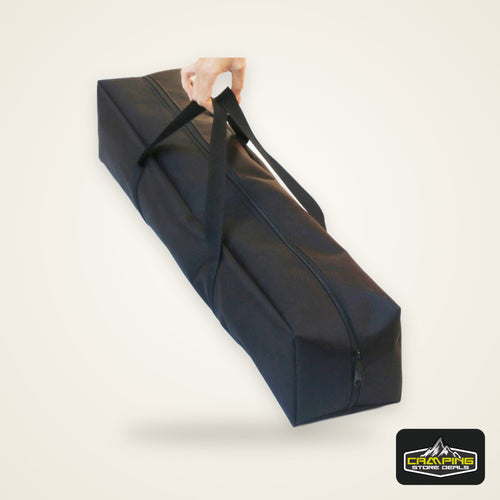
A large storage bag for packing the tent loosely, rather than tightly stuffing it into its original small stuff sack, helps prevent long term creasing and coating breakdown, which can shorten a tent's effective lifespan over several seasons of tight storage.
Choosing Accessories Based on How You Camp
Backpackers should prioritize lightweight repair accessories, like a pole repair sleeve and a small tube of seam sealer, since weight and packed size matter more than comfort extras.
Car campers have more flexibility to add comfort accessories like gear lofts, tent fans, and a full sized footprint, since weight is not a limiting factor.
Campers in variable climates benefit most from a strong stake and guy line setup, since wind and weather resistance become more important than interior comfort features.
Families or groups often find interior organization accessories, like hanging pockets and lighting, especially useful for keeping a larger, shared tent tidy and functional.
When to Replace Tent Accessories Rather Than Repair Them
Not every accessory is worth patching indefinitely. Stakes that are visibly bent out of shape rarely hold as well as new ones, even after straightening, and worn out shock cord inside poles often stretches again shortly after replacement if the poles themselves are heavily used. As a general guideline, small, low cost items like stakes, cordage, and tensioners are worth replacing proactively before a big trip, while larger investments like a footprint or full pole set are usually worth repairing first and replacing only when damage becomes extensive or repeated.
Common Mistakes When Choosing Tent Accessories
Using the wrong stakes for your terrain. Standard stakes that work fine in firm soil can fail completely in sand or snow, so it is worth matching your stakes to where you actually camp.
Skipping a repair kit entirely. A small, lightweight repair kit takes up very little space but can save an entire trip if a pole cracks or a seam starts to leak.
Overpacking comfort accessories on a backpacking trip. Items that make sense for car camping, like a large gear loft or a heavy lantern, can add unnecessary weight on a trip where every ounce matters.
Neglecting regular maintenance. Skipping seam resealing or proper cleaning shortens a tent's lifespan considerably, even if the tent itself is high quality.
Forgetting extra cordage or tensioners. A single snapped guy line without a backup can leave part of a tent under supported during exactly the kind of wind that caused the line to fail in the first place.
Building a Well Rounded Tent Accessory Kit
A solid starting kit for most campers includes a set of terrain appropriate stakes, extra guy line cordage, a small pole repair sleeve, a tube of seam sealer, and a properly sized footprint. From there, backpackers can keep things minimal, while car campers can layer in comfort focused extras like interior lighting and gear organization.
Pairing your tent accessories with the right core gear rounds out a dependable setup:
-
A reliable tent suited to your typical trips
-
A sleeping pad for insulation and added floor protection
-
A sleeping bag rated for the seasons you camp in most
-
A backpacking pack with enough room to carry your accessory kit without adding excess bulk
Essential Tent Accessories: Quick Checklist
-
Terrain appropriate stakes, plus a stake puller or small mallet
-
Extra guy line cordage and tensioners
-
Pole repair sleeve and spare shock cord
-
Footprint or ground tarp matched to your tent's floor size
-
Seam sealer for periodic waterproofing maintenance
-
Interior organization, like a gear loft, for larger or shared tents
-
A soft brush and mild cleaner for ongoing maintenance
Final Thoughts
The right set of essential tent accessories can turn a good tent into a dependable, long lasting shelter suited to exactly how you camp. Start with the basics, proper stakes, backup cordage, and a small repair kit, then build out from there based on whether you prioritize minimal weight or added comfort. A well prepared accessory kit is often the difference between a small trailside problem and a trip ending one.
Ready to round out your setup? Browse our full Tent Accessories collection and make sure your tent is ready for whatever the next trip brings.


 Tents & Shelter
 Sleep Systems
 Packs & Hiking
 Camp Kitchen
 Light & Power
 Survival & Skills
 Camping 101
 Fishing