

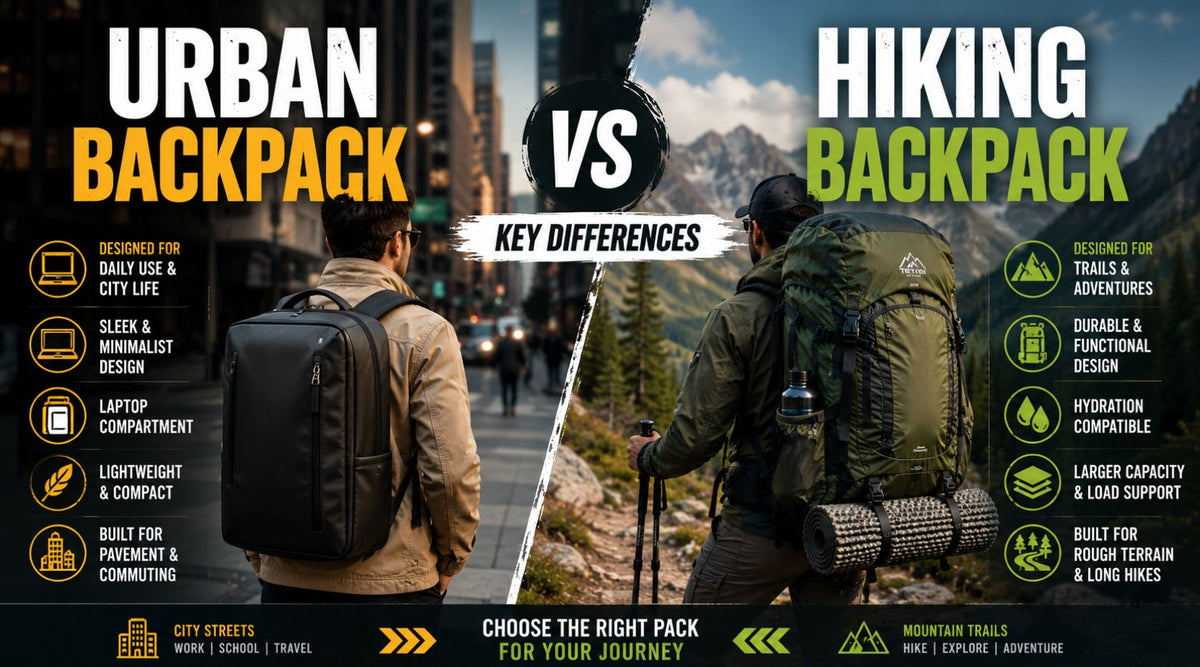
At first glance, a backpack is a backpack. Two straps, a main compartment, somewhere to put your stuff. But once you compare an urban backpack vs hiking backpack side by side, the differences become obvious fast. One is built for sidewalks, laptops, and commutes. The other is built for trails, weather, and multi hour wear under load. Choosing the wrong one for your lifestyle usually means discomfort, poor organization, or gear that fails when you need it most.
This guide breaks down exactly how these two bag types differ, so you can decide which one actually fits how you use it, and browse our full Backpacks and Bags collection with a clear idea of what to look for.
Urban Backpack vs Hiking Backpack: What Sets Them Apart
The core difference comes down to purpose. A city backpack is designed around daily convenience: fitting a laptop, looking presentable, and moving easily through crowded spaces. A trail backpack is designed around endurance: carrying weight comfortably over distance, handling rough weather, and organizing multi day gear.
That single difference in purpose shapes almost everything else about how each bag is built, from the materials used to how the straps are positioned.
Design and Structure
Urban backpacks tend to have a slimmer profile, a single large compartment or a few organized sections, and a more streamlined shape that looks natural in an office or on public transit. Many include a padded laptop sleeve as a core feature rather than an add on.
Hiking backpacks are built with a supportive internal or external frame, a padded hip belt to shift weight off the shoulders, and multiple compression straps to stabilize a load that changes in size and weight throughout a trip. The shape is bulkier by design, since it needs to hold a tent, sleeping bag, and food for multiple days.
Materials and Weather Resistance
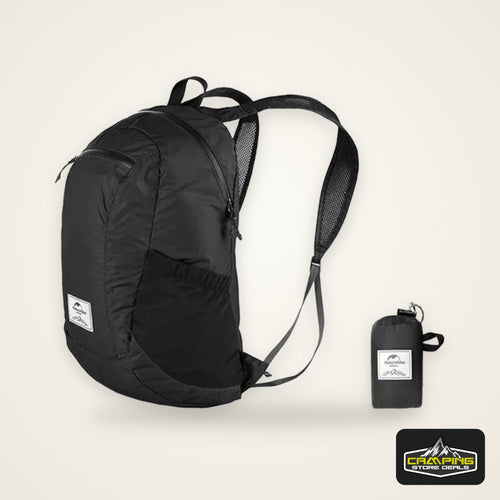
A commuter backpack often uses lighter weight fabric focused on looking clean and holding its shape, sometimes with water resistant coating but rarely built for sustained exposure to heavy rain.
A trail backpack usually relies on tougher, more abrasion resistant materials like ripstop nylon, since it needs to survive being set on rocky ground, brushed against branches, and exposed to sun and rain over multiple days. Many trail packs also come with, or are compatible with, a separate rain cover for extra protection.
Comfort and Weight Distribution
This is where the difference matters most in daily use.
A city daypack usually relies on padded shoulder straps alone, which works fine for light loads carried for short periods, like a walk to the office or a train commute.
A hiking backpack for day trips or multi day use is engineered differently. The hip belt is designed to carry most of the load on your hips rather than your shoulders, which makes a major difference once you are carrying 15 pounds or more for several hours. Without a hip belt, that same weight in an urban style bag would quickly cause shoulder and back fatigue.
Organization and Features
Urban backpacks typically prioritize:
-
A padded laptop or tablet sleeve
-
Quick access pockets for a phone, wallet, or keys
-
A clean, professional appearance suited for work or school
Hiking backpacks typically prioritize:
-
A hydration reservoir sleeve for a hydration pack or bladder
-
External attachment points for trekking poles or a sleeping pad
-
Multiple access points so gear can be reached without unpacking everything
-
Compression straps to stabilize the load as supplies are used
When to Choose an Urban Backpack
A city style pack makes the most sense if you are commuting to work or school, carrying a laptop most days, and rarely walking more than a mile or two at a time. It is also a better fit if appearance matters, since most trail packs are not designed with an office or classroom setting in mind.
When to Choose a Hiking Backpack
A trail pack is the better choice if you are walking longer distances with real weight on your back, especially over uneven terrain. Even for shorter hikes, the hip belt support and weather resistant build of a dedicated hiking backpack make a noticeable difference compared to a commuter style bag.
Can One Bag Do Both Jobs
Some hybrid packs try to blend features from both categories, offering a laptop sleeve alongside a basic hip belt and more durable fabric. These can work reasonably well for light hiking or travel, but they usually compromise on both sides. Someone hiking regularly will still want a dedicated trail pack with proper frame support, while someone commuting daily will likely prefer the cleaner look and laptop protection of a true urban design.
Common Mistakes When Choosing Between the Two
Using a hiking backpack for daily commuting. It works, but the frame and hip belt add unnecessary bulk for light, everyday loads, and the appearance is often less suited to an office setting.
Using an urban backpack for a real hike. Without a hip belt or supportive frame, carrying hiking gear in a city bag puts all the weight on your shoulders, which gets uncomfortable fast on longer trails.
Ignoring weather exposure. A daily commute in mild weather is very different from a full day exposed to rain and sun on a trail. Match the fabric and water resistance to how the bag will actually be used.
What to Pair With Either Bag
Depending on which style fits your needs, consider pairing your pack with:
-
A day pack if you need something between the two, for short hikes or light travel
-
Backpack accessories like rain covers or organizational pouches
-
A hydration pack for longer hikes where a water bottle alone is not enough
Final Thoughts
When it comes down to urban backpack vs hiking backpack, the right choice depends entirely on how and where you plan to use it. Choose an urban design for daily commuting, laptop protection, and a clean look. Choose a trail focused pack for weight distribution, weather resistance, and comfort over distance. Matching the bag to its actual job is what makes the difference between a pack that works for you and one you are constantly fighting with.
Ready to find the right one? Browse our full Backpacks and Bags collection and pick the style that matches how you actually move through your day.


 Tents & Shelter
 Sleep Systems
 Packs & Hiking
 Camp Kitchen
 Light & Power
 Survival & Skills
 Camping 101
 Fishing