

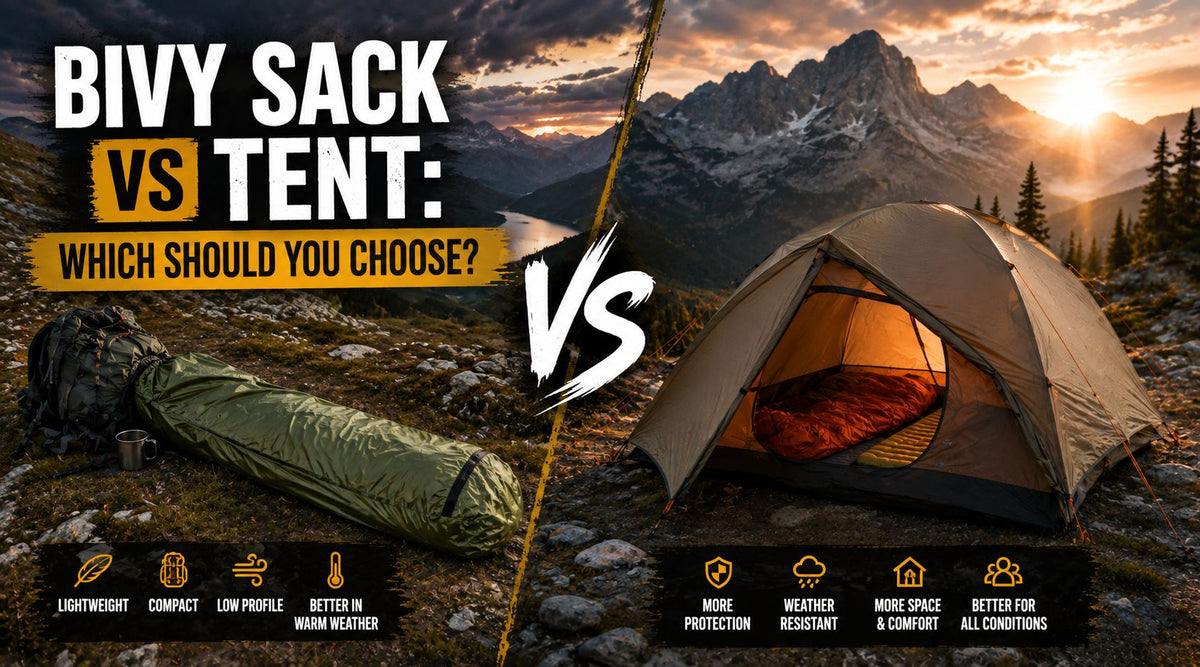
When it comes to bivy sack vs tent, the right answer depends less on which shelter is objectively better and more on how you actually camp. A bivy sack strips shelter down to the essentials, while a tent trades weight and packed size for comfort and livable space. Both have earned their place in outdoor gear for good reason, and understanding where each one shines makes the decision much easier.
This guide breaks down the real differences so you can decide with confidence, and browse our Shelters and Tarp Tents collection alongside our bivy sack options to find the right shelter for your next trip.
What Is a Bivy Sack
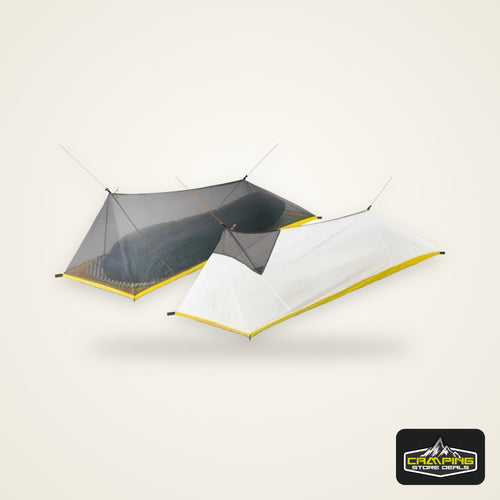
A bivy sack, short for bivouac sack, is a minimal shelter that wraps closely around a sleeping bag, essentially acting as a waterproof and windproof outer shell. Most bivy sacks are barely larger than the sleeping bag itself, with just enough room to keep gear dry without any real interior living space.
Bivy sacks are popular among ultralight backpackers, mountaineers, and hikers who prioritize minimal weight and packed size over comfort, especially on trips where every ounce matters.
What Is a Tent
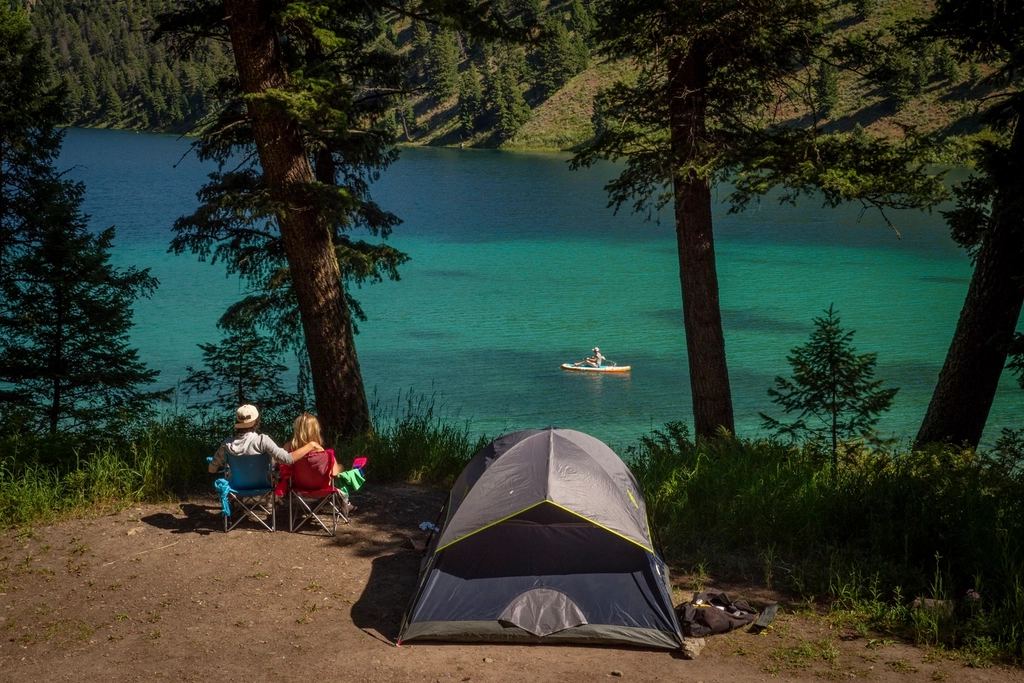
A tent is a fully enclosed shelter with walls, a floor, and usually a separate rainfly, designed to give campers actual living space to sit up, store gear, and wait out bad weather comfortably. Tents range from ultralight backpacking tents to larger car camping tents built for multiple people and extended stays.
Unlike a bivy sack, a tent creates a protected space you can move around in, which matters a lot on trips where you might be stuck inside during a storm or camping for more than a night or two.
Bivy Sack vs Tent: Weight and Packed Size
This is where the bivy sack camping setup clearly wins. A typical bivy sack weighs well under two pounds and packs down to roughly the size of a water bottle, making it a favorite for ultralight backpackers and mountaineers trying to shave every possible ounce from their pack.
A comparable one or two person tent, even an ultralight backpacking tent, usually weighs two to four pounds and takes up noticeably more space in a pack. For short, fast moving trips or technical mountaineering routes, that weight difference matters enormously.
Bivy Sack vs Tent: Weather Protection
Tents generally offer more complete protection, especially in sustained rain, wind, or cold. A quality rainfly and enclosed walls shield you from blowing rain and provide a buffer of dead air space that helps with insulation.
A bivy sack still offers solid waterproof and windproof protection since it wraps directly around your sleeping bag, but it lacks that buffer zone. In heavy or prolonged storms, condensation can also build up faster inside a bivy sack, since there is less airflow and no separate rainfly to manage moisture.
For trips where extended bad weather is likely, a tent typically holds up better. For short trips in generally stable conditions, a bivy sack is often more than sufficient.
Bivy Sack vs Tent: Comfort and Livable Space
This is the clearest tradeoff between the two. A tent gives you room to sit up, change clothes, organize gear, and wait out weather without feeling trapped. For trips longer than a night or two, or for anyone who values a bit of personal space, that difference matters.
A bivy sack offers essentially no interior space beyond your sleeping bag. You cannot sit up, and most tasks like changing clothes or cooking need to happen entirely outside the bivy. Some campers do not mind this at all, especially those using a bivy sack purely as a place to sleep between long days of movement. Others find it uncomfortably confining, especially on multi day trips.
Bivy Sack vs Tent: Setup and Ease of Use
A bivy sack wins on simplicity. There are no poles to assemble and often minimal staking required, which means setup can take less than a minute, even in poor visibility or bad weather.
A tent requires more steps, poles, stakes, and a rainfly, though most modern backpacking tents are designed to pitch in five to ten minutes once you are familiar with the process. In wind or rain, however, tent setup can become more challenging than a bivy sack, which is part of why bivy sacks remain popular among mountaineers who may need shelter quickly in changing conditions.
Bivy Sack vs Tent: Cost
Bivy sacks are generally less expensive than tents of comparable quality, since they use less material and have a simpler design overall. This makes a bivy sack an appealing entry point for backpackers looking to minimize gear costs without sacrificing weather protection.
Tents span a much wider price range depending on capacity, materials, and features, but even a solid entry level backpacking tent will typically cost more than a comparable bivy sack.
Who Should Choose a Bivy Sack
A bivy sack tent alternative makes the most sense for:
-
Ultralight backpackers prioritizing minimal pack weight
-
Mountaineers or climbers who need a fast, minimal shelter for unplanned overnight stops
-
Solo hikers on short trips in generally stable weather
-
Anyone supplementing a larger kit with an emergency or backup shelter option
Who Should Choose a Tent
A full tent setup is the better choice for:
-
Multi day trips where comfort and organization matter
-
Family or group camping where shared living space is important
-
Trips in areas with unpredictable or extended bad weather
-
Campers who want room to sit up, change clothes, or wait out a storm comfortably
Can You Use Both
Many experienced backpackers actually carry both, using a tent for base camp or planned overnight stops and a lightweight bivy sack as a backup shelter for emergencies or unplanned nights on the move. This combination offers flexibility without fully compromising on weight or comfort.
What to Pair With Either Shelter
Regardless of which option you choose, consider rounding out your setup with:
-
A properly rated sleeping bag suited to your expected temperatures
-
A compact sleeping pad for insulation from the ground
-
A reliable backpacking pack sized to fit your shelter and gear comfortably
Bivy Sack vs Tent: Quick Comparison Checklist
-
Weight: bivy sack wins for minimal pack weight
-
Weather protection: tent wins for sustained storms and extended exposure
-
Comfort: tent wins for livable space and multi day trips
-
Setup speed: bivy sack wins for quick, simple pitching
-
Cost: bivy sack generally more affordable
-
Versatility: tent better suited for groups and longer stays
Final Thoughts
Choosing between a bivy sack vs tent really comes down to how you camp and what you value most. If minimal weight, fast setup, and simplicity matter more than comfort, a bivy sack is hard to beat. If you want livable space, better protection during extended bad weather, or you are camping with others, a tent is usually the better investment.
Ready to gear up? Browse our full Tents and Shelters collection and find the shelter that matches how you actually get outdoors.


 Tents & Shelter
 Sleep Systems
 Packs & Hiking
 Camp Kitchen
 Light & Power
 Survival & Skills
 Camping 101
 Fishing