

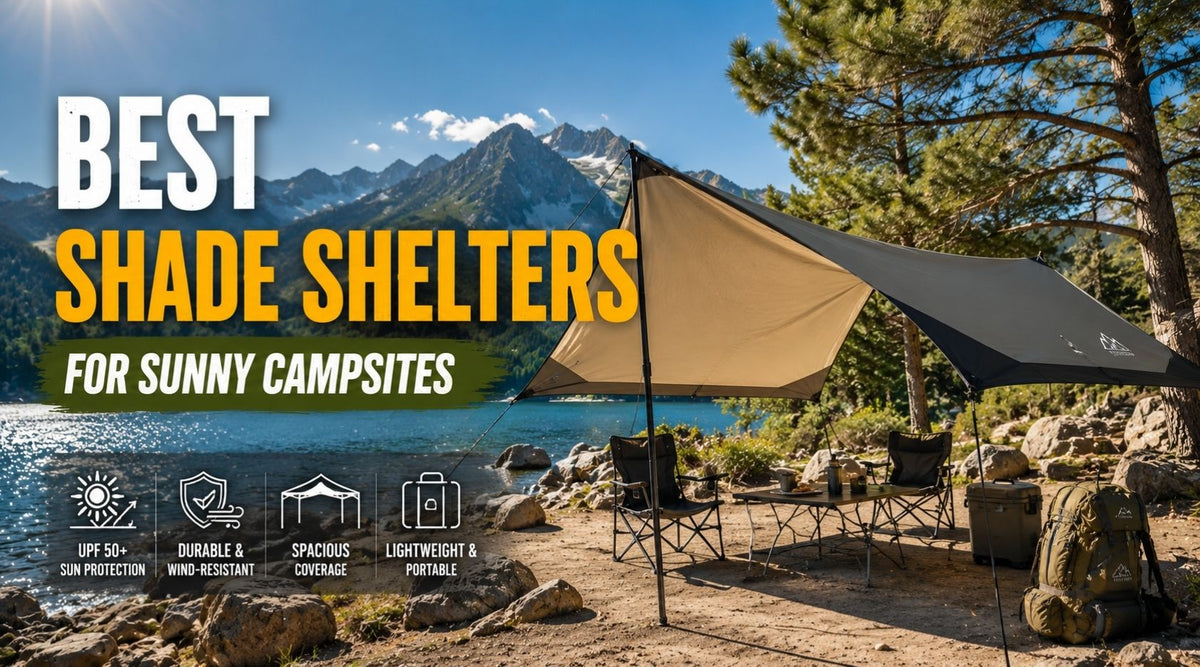
Not every trip calls for a full tent, but almost every sunny day outdoors calls for some kind of shade. Whether you are spending the afternoon at the beach, setting up a basecamp for the day, or just trying to keep a picnic table cool, a good sun shelter makes a real difference. This best shade shelter guide covers what to look for, from size and UV protection to setup speed, so you can find something that fits how you actually spend time outdoors.
By the end, you will know exactly what separates a solid shade shelter from a flimsy one, and you can browse our Shade Shelters collection to find the right fit for your next trip.
What Counts as a Shade Shelter
A shade shelter sits somewhere between an umbrella and a full tent. Unlike a tent, it is not designed to be a fully enclosed sleeping space. Instead, it focuses on blocking sun exposure while staying open enough for airflow and easy movement in and out. Most sun shelters use a simple pole or frame system with a UV resistant canopy, and many can be set up in just a few minutes.
This makes them a popular choice for beach days, picnics, festivals, fishing trips, and as a shaded basecamp spot at a larger campsite.
Types of Shade Shelters
Pop up canopy shelters. These use a spring loaded frame that expands into shape almost instantly, making them one of the fastest options to set up. They usually offer four open sides, which is great for airflow but offers less wind blocking.
Beach tents and sun tents. These typically have at least one or two closed sides along with mesh windows, offering a bit more privacy and wind protection than an open canopy, while still keeping the front open for airflow.
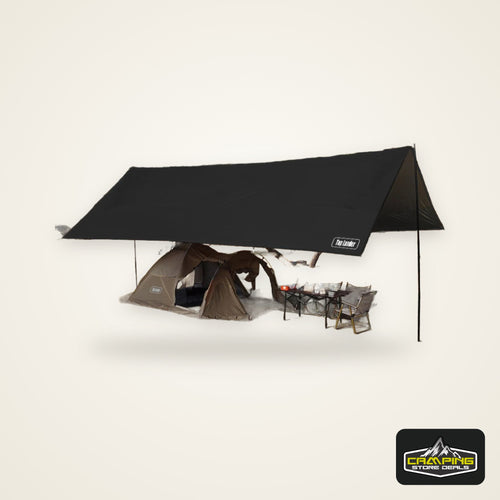
Tarp style shade shelters. A simple tarp strung between poles or trees offers the most flexibility in shape and setup, and it is often the lightest and most packable option, though it usually requires more effort to pitch correctly.
Awning style shelters. Often attached to a vehicle or larger tent, these extend usable shaded space without needing a fully separate structure, which works well for car camping or basecamp setups.
Best Shade Shelter Guide: What to Look For
UV Protection Rating
Look for a UPF rating, ideally UPF 40 or higher, which indicates how effectively the fabric blocks harmful UV rays. A higher rating matters most for extended beach days or high altitude trips where sun exposure is more intense.
Size and Coverage Area
Shade shelters are often measured in square footage of coverage. A shelter in the 50 to 80 square foot range comfortably fits one or two people with chairs, while larger family sized shelters can cover 100 square feet or more, enough for a full group with gear.
Setup Speed and Ease
Pop up canopy shelters are the fastest to set up, often in under a minute, while tarp style shelters require more time and technique. If you plan to use your shelter frequently or in changing conditions, prioritize something quick to pitch and take down.
Ventilation
Mesh panels or open sides help keep the space underneath cool, which matters more than people expect once you are sitting under direct sun for hours. A fully closed shelter can actually trap heat if airflow is not considered.
Wind Stability
Even light wind can turn an unanchored sun shelter into a problem. Look for included stakes, guy lines, or sandbag pockets, especially for beach use where soft sand makes stable anchoring more difficult.
Portability
Packed size and weight matter most if you are carrying the shelter any real distance. Beach and park shelters can be bulkier since they are usually carried short distances from a car, while backcountry basecamp shelters benefit from a lighter, more compact design.
Choosing a Shade Shelter Based on Where You Use It
For the beach, prioritize sand stakes or sandbag anchors, UV protection, and a design that handles ocean breeze without collapsing.
For a park or picnic setting, a pop up canopy with easy setup and breakdown works well, since you are likely moving it or packing it away multiple times in a day.
For a basecamp at a larger campsite, a slightly larger shelter with side walls or an awning style setup gives you a comfortable shaded space to cook, relax, or store gear during the day.
For fishing or long stationary days outdoors, a low profile, wind resistant shelter with strong anchoring tends to hold up best over several hours in one spot.
Common Mistakes When Buying a Shade Shelter
Skipping the UV rating. Not all fabric blocks sun equally, and a shelter without a clear UPF rating may offer far less protection than expected.
Ignoring wind conditions. A shelter that looks sturdy in a showroom can become unstable quickly in open, windy areas like beaches or exposed campsites.
Buying based on price alone. Cheaper shelters often use thinner fabric and weaker poles, which can fail faster under sun exposure and repeated use.
Underestimating coverage needs. A shelter that fits two people snugly will feel cramped once you add chairs, coolers, and bags, so it is worth sizing up slightly for comfort.
What to Pair With a Shade Shelter
To round out a comfortable day outdoors, consider pairing your shelter with:
-
Camp chairs and a portable table for a complete shaded setup
-
A cooler or insulated bag to keep food and drinks cool in the shade
-
Sun protection accessories like hats or sunscreen for time spent outside the shelter itself
-
A tent if your trip also requires overnight shelter, since a shade shelter is not designed for sleeping
Best Shade Shelter Guide: Quick Checklist
-
UPF 40 or higher for solid UV protection
-
Coverage size matched to your group and gear
-
Fast, manageable setup for how often you will use it
-
Mesh panels or open sides for airflow
-
Stakes, guy lines, or sandbag anchors for wind stability
-
Packed size appropriate for how far you need to carry it
Final Thoughts
This best shade shelter guide comes down to matching the shelter type to where and how you spend time outdoors. A quick pop up canopy suits fast moving days at the park, while a sturdier sun tent or awning style setup works better for longer stays at the beach or campsite. Prioritize UV protection, proper anchoring, and the right coverage size, and you will stay comfortable through even the sunniest days.
Ready to find your shade? Browse our full Shade Shelters collection and get set up for your next sunny trip.



 Tents & Shelter
 Sleep Systems
 Packs & Hiking
 Camp Kitchen
 Light & Power
 Survival & Skills
 Camping 101
 Fishing