

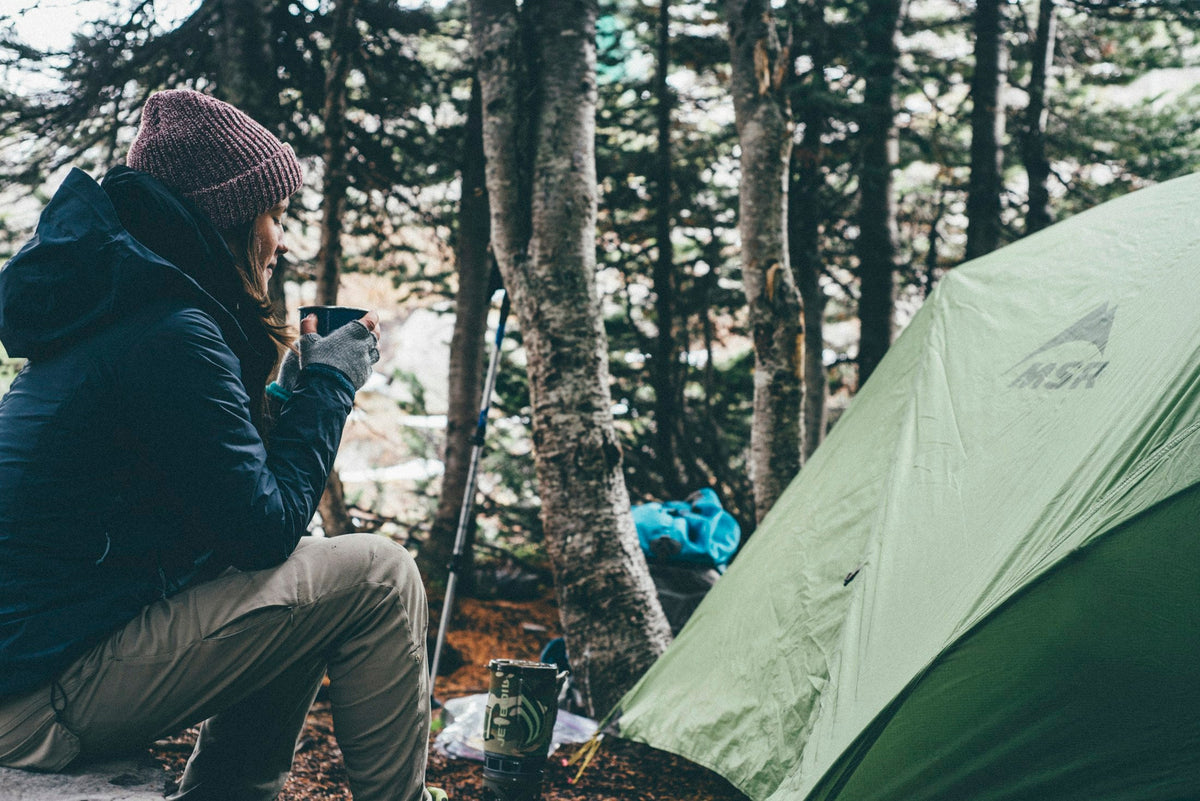
Your stove is the heart of every camp kitchen. It decides how fast your morning coffee happens, whether dinner is a real meal or just rehydrated noodles, and how much weight you carry up the trail. The good news is that modern stoves are excellent. The trick is matching the fuel type to the way you actually camp.
This guide breaks down every major stove style, where each one shines, where it struggles, and the small details that separate a stove you love from one that sits in the garage. When you are ready to compare models, browse our camp stoves and grills.
The five main types of camp stove
Almost every camping stove falls into one of five families, defined by the fuel it burns:
- Canister stoves burn a pressurized isobutane and propane blend from a small screw-on canister.
- Liquid fuel stoves burn white gas (and often kerosene or unleaded gasoline) from a refillable bottle you pump by hand.
- Two-burner propane stoves run off the familiar green 1 lb cylinders or a refillable tank and are built for car camping.
- Alcohol stoves are tiny, nearly silent burners that use denatured alcohol.
- Wood and biomass stoves burn twigs, pinecones and other natural fuel you collect at camp.
Canister stoves: the backpacker's default
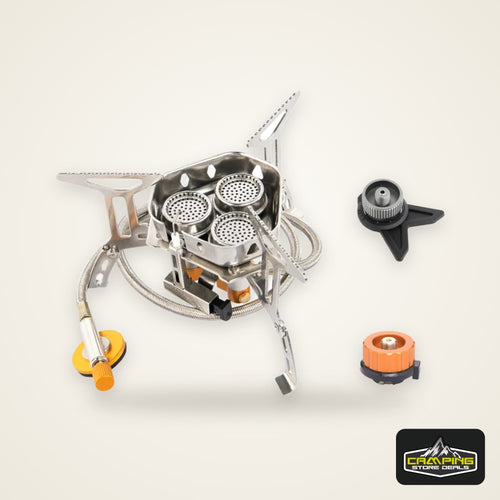
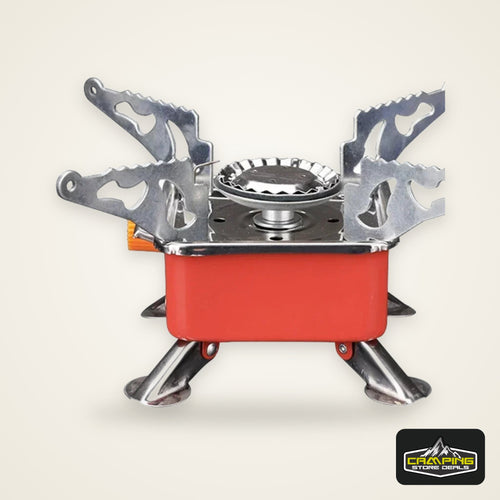
Canister stoves are popular for good reason. You thread the burner onto the canister, open the valve and light it. There is no priming, no pumping and almost no maintenance. Many models fold down small enough to nest inside a cook pot along with the fuel.
They come in two main designs. Upright stoves sit directly on top of the canister and are the lightest option. Integrated systems pair the burner with a dedicated pot and heat exchanger, which wastes less heat in the wind and boils water very efficiently, at the cost of being less flexible for real cooking.
The weakness is cold. Canister fuel is a liquefied gas, and as the temperature drops the pressure inside the canister drops with it. Near freezing you will notice a weaker flame, and well below freezing a standard upright stove can struggle badly.
Pro tip: in cold weather, sleep with tomorrow's canister in the foot of your sleeping bag and keep it in an inside jacket pocket until you cook. A warm canister performs dramatically better.
Liquid fuel stoves: the cold-weather workhorse
Liquid fuel stoves connect to a refillable bottle with a hand pump. You pressurize the bottle, prime the burner with a small amount of fuel and then run it like a blowtorch. That extra ritual buys you two big advantages: steady performance in deep cold and the ability to burn fuels you can find almost anywhere in the world.
They are also the most efficient choice for melting snow and for big groups, because a bottle of white gas holds a lot of energy and you can top it up rather than carrying multiple canisters. The tradeoffs are weight, a little more noise, occasional maintenance and a learning curve when priming.
Two-burner propane stoves: the car camping kitchen
If you drive to your campsite, a two-burner propane stove is the most comfortable way to cook. Two burners let you make pancakes and bacon at the same time, the wide grate holds a real skillet, and wind panels on three sides keep the flame steady. Many models produce around 10,000 BTU per burner, which is plenty for boiling a large pot of pasta water.
Look for simmer control that goes genuinely low, a stable latch, and the option to run from a refillable tank with an adapter hose. A refillable tank costs more upfront but is cheaper and less wasteful than a stack of disposable cylinders over a season.
Alcohol and wood stoves: ultralight and off-grid
Alcohol stoves weigh almost nothing and have no moving parts, which is why ultralight hikers love them. They are slow, sensitive to wind and hard to adjust, so they suit solo hikers boiling water rather than anyone cooking for a family. They also have an invisible flame in daylight, so take extra care, and check local fire rules because some areas restrict open-flame stoves without a shut-off valve.
Wood and biomass stoves free you from carrying fuel at all. Gasifying designs burn small sticks surprisingly cleanly and are a joy on a long trip in forested country. The catch is that they need dry fuel, take tending, blacken your pot and are often banned during fire restrictions.
Side-by-side comparison
| Stove type | Best for | Cold weather | Weight | Ease of use |
|---|---|---|---|---|
| Upright canister | Backpacking, solo and pairs | Fair | Very light | Excellent |
| Integrated canister system | Fast boiling, windy trips | Fair to good | Light | Excellent |
| Liquid fuel | Winter, groups, travel abroad | Excellent | Moderate | Good once learned |
| Two-burner propane | Car camping, families | Fair | Heavy | Excellent |
| Alcohol | Ultralight solo hiking | Poor | Ultralight | Simple but slow |
| Wood / biomass | Long trips in forested areas | Good with dry fuel | Light to moderate | Needs tending |
Features that actually matter
- Simmer control. Boiling water is easy. Cooking eggs without scorching them needs a valve that holds a low flame.
- Wind resistance. Wind steals heat faster than anything else. Recessed burners, integrated heat exchangers and folding windscreens all help.
- Pot support. Wide, grippy arms keep larger pots stable on uneven ground.
- Ignition. Built-in piezo igniters are convenient but can fail, so always carry a lighter as a backup.
- Fuel availability. Canisters are easy to find in outdoor stores but cannot fly with you. Liquid fuel and propane are easier to source in more places.
Safety: never fully enclose a canister stove with a windscreen. Trapped heat can overheat the canister. Use the windscreen your stove manufacturer recommends and leave a gap around the fuel.
Which stove should you buy?
If you mostly backpack in three-season conditions, an upright canister stove or integrated system is the easy answer. If you camp in winter, melt snow or travel internationally, a liquid fuel stove earns its extra weight. If you camp from your car with family or friends, a two-burner propane stove will make every meal feel like home. Pair your stove with a nesting cookware set and you have a kitchen that packs into a single bin.
Bottom line
There is no single best camp stove, only the best stove for your trips. Choose by where you camp, how cold it gets and how many people you cook for, then practice lighting it at home before you rely on it in the backcountry.


 Tents & Shelter
 Sleep Systems
 Packs & Hiking
 Camp Kitchen
 Light & Power
 Survival & Skills
 Camping 101
 Fishing