

Camp cooking has a reputation problem. Ask most people what they ate on their last camping trip and the answer is usually some variation of hot dogs, granola bars, and whatever someone burned over a fire on night two. That's not a food problem—it's a planning problem. Camp cooking can be genuinely good. We know this because people who actually cook at camp eat better on a Tuesday night at a campsite than most people eat at home on a Friday.
The gear matters here. A reliable two-burner stove and a decent pan make the difference between a camp kitchen that works and one that doesn't. At Camping Store Deals, we carry camp cooking equipment at prices that remove the barrier to equipping a real camp kitchen—so this guide assumes you have, or are willing to get, basic cooking capability.
The Principles of Good Camp Cooking
Great camp food follows three rules. First: prep at home, cook at camp. Most cutting, measuring, and marinating can happen in your kitchen before you leave. That prep gets stored in labeled bags or containers and arrives at camp ready to cook. Second: one-pan or one-pot whenever possible. Washing dishes at a campsite is a legitimate pain, and multi-pan meals double or triple your cleanup time. Third: account for conditions. A recipe that works on a calm evening might be impractical in wind, rain, or a fire ban. Have a backup plan.
Campfire Meals That Genuinely Work
1. Foil Packet Chicken and Vegetables
This is the foundational campfire meal. Chicken thighs (bone-in, skin-on) with diced potatoes, bell peppers, onion, olive oil, and your seasoning of choice, wrapped in heavy-duty foil and placed on coals for 35–40 minutes. Prep the packets at home, store them cold, and cook them at camp. Zero dishes, zero complexity, genuinely delicious every time.
2. One-Pan Camp Breakfast Scramble
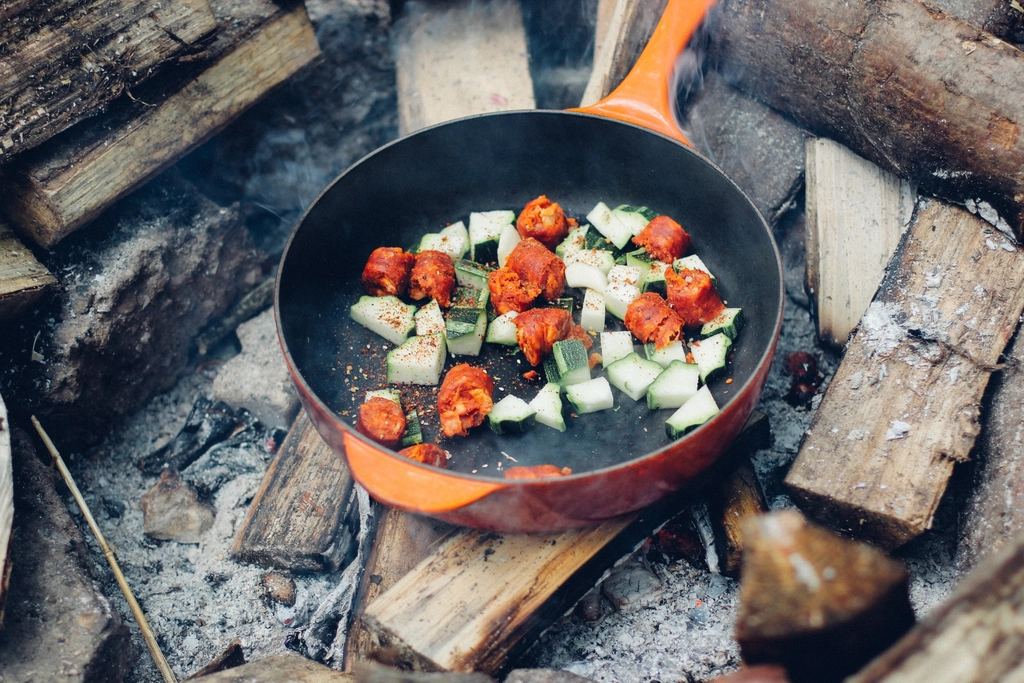
Pre-chop your onion, peppers, and protein at home. At camp, heat oil in the pan, cook everything together, crack in eggs, and scramble. Takes ten minutes, uses one pan, feeds as many people as you scale it to. The secret is a hot pan and patience—let things get some color before stirring.
3. Dutch Oven Chili
If you have a cast iron Dutch oven, chili over a campfire is among the best things you can eat outdoors. Brown ground beef or turkey, add canned tomatoes, kidney beans, and your spice mix, let it simmer for an hour. The Dutch oven retains heat perfectly over coals. Bring cornbread mix for a cast iron skillet alongside it.
4. Campfire Quesadillas
Flour tortillas, shredded cheese, and whatever protein you have—canned black beans, pre-cooked chicken, or leftover meat. Two minutes per side in a lightly oiled pan over a camp stove. Serve with a small container of salsa you brought from home. This is the fastest hot camp meal that feels like you actually tried.
5. Pasta with Jarred Sauce and Italian Sausage
This is the meal that converts skeptics. Boil water, cook pasta, brown sliced sausage in a second pan, add jarred marinara and combine. Total cooking time: fifteen minutes. Total dishes: two pots and a spoon. The hot meal at camp that no one expects to taste this good.
6. Campfire Grilled Fish
Whole fresh trout or fish fillets, seasoned with salt, lemon, and herbs, grilled over direct heat in a camp grill basket. If you're fishing at your campsite, this is the ultimate reward for a morning spent on the water. If not, bring fish on ice and cook it night one. It doesn't travel well to night three.
7. Loaded Baked Potatoes (Fire Method)
Rub potatoes in olive oil and salt, wrap in foil, and bury in hot coals for 45–60 minutes. Pull them out, top with cheese, sour cream (in a small container from home), bacon bits, and chives. This is a full meal with essentially no camp cooking skill required. Timing is the only variable.
8. Stove-Top Ramen Upgrade
Instant ramen gets dismissed as camping food for people who didn't try. The upgrade is simple: cook it in broth instead of water, add a soft-boiled egg (boil at home and pack in a small container), add pre-cooked protein and a handful of spinach. Five minutes of camp cooking that produces something genuinely satisfying on a cold night.
9. Campfire Nachos
Layer chips, canned black beans, and shredded cheese in a Dutch oven or cast iron skillet, cover with foil, and set over medium heat for five to eight minutes until cheese melts. Top with sliced jalapeños, sour cream, and salsa. This is the camp appetizer or late-night snack that no one expected to be this good.
10. Breakfast Burritos (Pre-Made at Home)
Make burritos at home—scrambled eggs, cheese, sausage, and salsa in large flour tortillas, wrapped in foil. Freeze them. At camp, heat them over the campfire still in foil for fifteen minutes, turning once. This is the breakfast that requires zero camp cooking skill and produces something actually satisfying. Scale to your group size.
Snacks That Make the Miles and Hours Better
Between meals, camp snacking keeps energy up and moods stable, especially on active trip days. Trail mix made at home from your preferred ratio of nuts, dried fruit, and chocolate is cheaper and better than pre-made mixes. Energy balls made from oats, peanut butter, and honey travel well and don't require refrigeration. Fresh fruit on day one and two, before it gets soft. Jerky for protein without refrigeration needs.
The Equipment That Makes Camp Cooking Work
A two-burner camp stove is the single most valuable piece of camp kitchen equipment. It handles boiling and sautéing simultaneously, doesn't depend on a campfire, and operates in conditions where open flame isn't permitted. Camping Store Deals carries two-burner propane stoves under $65 that have powered seasons of real camp cooking by real people.
A cast iron skillet or Dutch oven is the second key piece. Cast iron holds heat evenly, works over any heat source (stove, campfire, coals), and lasts forever if treated properly. A 10-inch skillet handles most cooking tasks for one to three people. A 5-quart Dutch oven handles group cooking.
Beyond the stove and cookware: a reliable camp kitchen setup includes a cutting board (we like flexible plastic that rolls up), a sharp camp knife, a cooking spoon that won't melt, a pot with a lid, and a collapsible dish basin for cleanup. All of this can be assembled for under $80 at Camping Store Deals.
One Rule for Camp Cooking Success
Make the first meal at camp something you've already made before. The first night is when everyone's tired, the tent is half set up, and someone can't find the lighter. That's not the night to try a new recipe. Save the ambitious cooking for night two, when you're set up, rested, and actually enjoying the trip. Night one: foil packets, pasta, or burritos from home. Night two: try whatever you want. That sequencing alone will make your camp cooking better than 90 percent of what happens at campgrounds across America.


 Tents & Shelter
 Sleep Systems
 Packs & Hiking
 Camp Kitchen
 Light & Power
 Survival & Skills
 Camping 101
 Fishing