

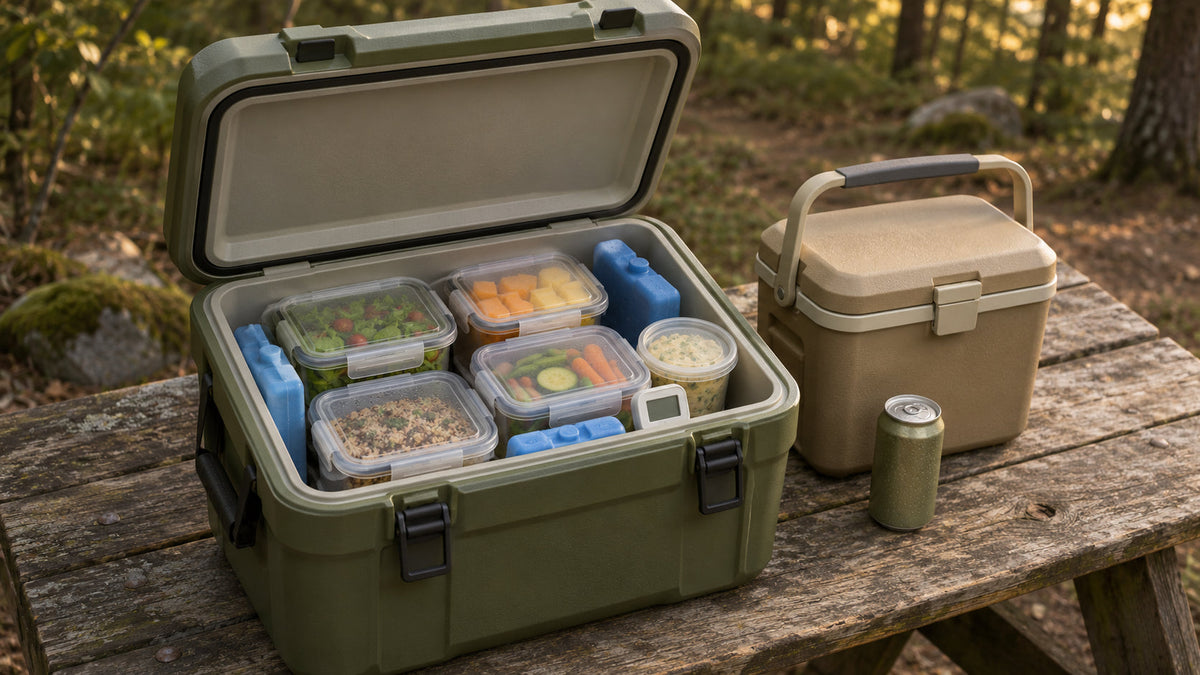
You open the food cooler at camp and the thermometer is higher than you expected. There are still a few pieces of ice, the lid has been opened a lot, and you can't remember the last reading. What matters now is not whether the box feels cool. It's whether the perishable food stayed cold enough and, if it didn't, for how long.
Know which temperature you are looking at
An appliance thermometer in the cooler monitors conditions at its sensor. It doesn't measure the center of every container or tell you how long an item was warm. A food thermometer measures the temperature of the food you check. A quick reading on the outside of a container, a cold-feeling drink or a patch of surviving ice isn't a substitute for either measurement.
FoodSafety.gov recommends an appliance thermometer in the cooler to help monitor whether food stays at 40°F (about 4°C) or colder. Keep the display where you can check it without unpacking the box, and follow the thermometer's instructions. If you need an actual food temperature, use a clean food thermometer and follow its instructions rather than treating the cooler display as a direct food reading.
Make the next check count
Notice the reading when you load the cooler, again at arrival, and when it matters: after a long stop, when ice is running low or before serving a later meal. Write the time alongside the reading. The point is to give yourself some history to work with if a number looks wrong. A notebook or phone note is enough, and gaps in the record are still gaps, not evidence of safe storage.
For a warm reading, close the lid rather than continuing to rummage. Check whether it was left ajar or blocked by bulky packaging, and restore an adequate cold source if ice or frozen packs are running out. Put the cooler in a shaded spot where permitted. Follow the site's food-storage rules when it isn't in use; our food-locker packing guide helps with the fit question, not the temperature decision.
Don't confuse cooling the box with rescuing the food
Adding fresh ice helps control the temperature going forward. It does not erase earlier warm time. The FDA's outdoor food-safety guidance says to keep cold perishables at 40°F or below and not leave them in the temperature danger zone for more than two hours, or more than an hour when outdoor temperatures exceed 90°F. The same agency's thermometer guidance advises discarding food when you cannot tell how long it has been warm. Don't use a smell, taste or appearance check to make that call.
For example, a cooler dial that jumps right after you open the lid tells you what the sensor saw at that moment, not the history of the yogurt beside it. But if the cooler has been warm for an unknown stretch, you cannot use a colder reading after re-icing as proof that the yogurt was kept safely. Set aside perishables with an uncertain warm history and use a shelf-stable meal instead.
Change what goes into the box next time
Start with already-chilled food and enough ice or frozen packs to keep it cold. Put ingredients for the next meal where you can reach them quickly. If your group frequently wants cold drinks, give beverages their own cooler so the food cooler stays closed more often. The USDA's outdoor guidance also recommends keeping raw food separate from other items. Use leakproof packaging for raw meat and keep it away from foods that won't be cooked.
Pack one actually shelf-stable meal that everyone will eat, and follow the package directions after opening. Unopened shelf-stable beans, crackers and a suitable unopened shelf-stable spread can cover lunch while you change plans. That backup makes it easier to throw away questionable cold food without turning a temperature issue into a scramble for dinner.



 Tents & Shelter
 Sleep Systems
 Packs & Hiking
 Camp Kitchen
 Light & Power
 Survival & Skills
 Camping 101
 Fishing