

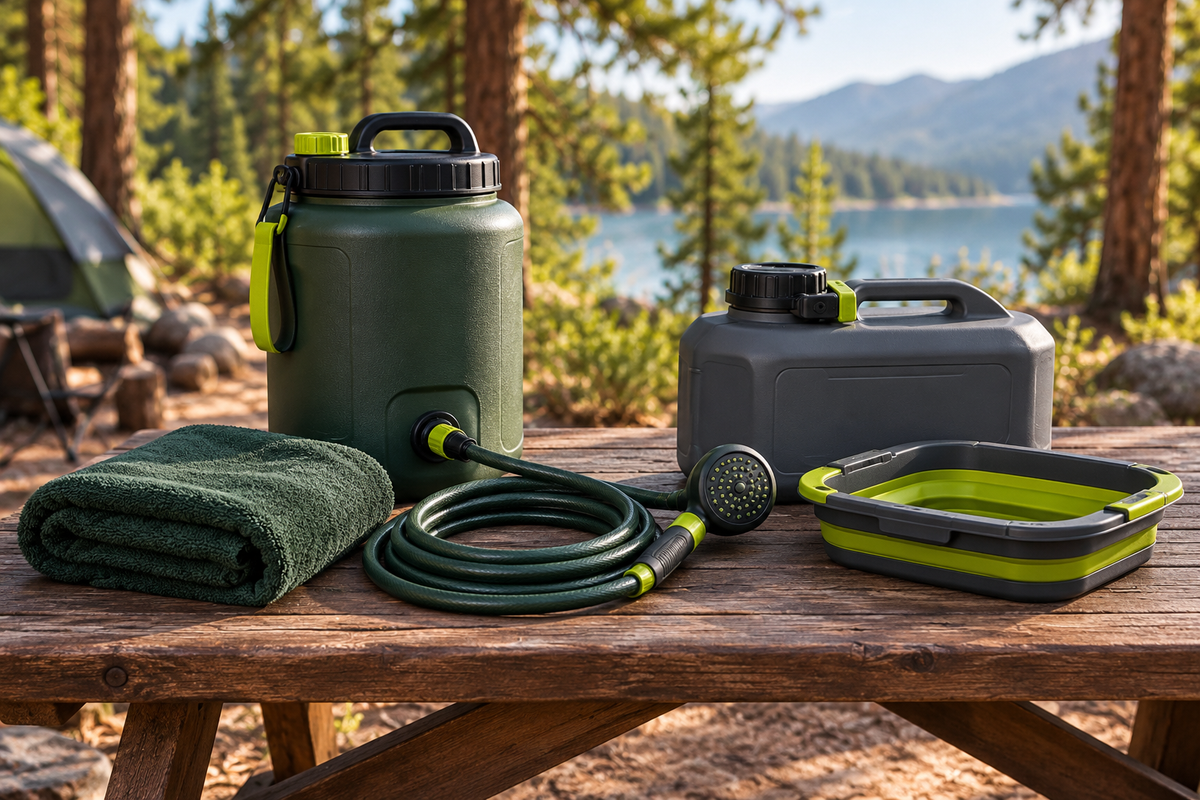
A portable shower can make a dusty camping weekend more comfortable. But the pump and shower head are only part of the setup. Before buying one, work out where you may use it, how you will supply the water and where the used water must go.
This is a planning guide for developed campgrounds. It is not permission to shower at a particular site or a backcountry wastewater-disposal rule. The campground's current instructions decide what is allowed.
Ask about showers before comparing equipment
Start with the campground's official facilities page and current rules. A restroom does not necessarily include a shower, and a water tap does not tell you where washing is permitted. The National Park Service's frontcountry camping overview explains that facilities vary; primitive campgrounds may have non-potable water or no water supply.
Write down three questions: Are portable showers allowed? Must all wastewater be collected? Where is the approved disposal point? If the published information leaves any of those unclear, ask the campground before packing. A neighboring camper's setup is not a reliable answer.
Also check whether a privacy shelter counts toward the site's structure limit and whether it must stay on the established pad. A shower enclosure takes space even when the sleeping tent fits comfortably.
A privacy tent is not a collection system
The word “shower tent” usually describes an enclosure. Read the floor description separately. A floor with mesh or drainage openings may provide privacy while allowing water to run onto the ground. That is different from a basin designed to retain used water.
As a concrete example, Congaree National Park's September 2025 superintendent's compendium requires portable shower arrangements in developed campgrounds to collect gray water. It prohibits that water draining onto the ground and directs campers to carry it out or use a designated gray-water area. This is a local rule, not a claim that every campground uses identical wording. Check the park's latest rules before travel.
Plan the complete path: clean-water container, shower, collection basin, transfer method and closed wastewater container. If any step is missing, the kit is not ready for a campground that requires collection. Do not assume biodegradable soap changes the disposal rule.
Separate pump features from water treatment
A powered pump moves water. A heater changes its temperature. A filter may address specific contaminants only when its manufacturer documents that purpose. Those are different functions; a product description mentioning a filtered shower head does not by itself establish drinking-water treatment.
For any shower you consider, confirm the intended source water, permitted water-temperature range, power supply and cleaning instructions. Keep drinking-water planning separate. Use a source the campground identifies as suitable for the intended use, and follow the equipment instructions rather than improvising with an unknown supply.
Our current hygiene and sanitation selection is a starting point for comparing equipment. Check the exact item's instructions and included parts before assuming a bucket, basin or wastewater container comes with it.
Plan volume in both directions
A large fresh-water container can create an equally awkward used-water problem. Estimate how much water the group plans to use, then check whether your collection and storage arrangement can handle it without an improvised overflow.
Use a practical home rehearsal to learn the setup. With the equipment used according to its instructions, check connections, confirm how to stop the flow and measure ordinary consumption into a suitable collection container. Treat the result as your own planning estimate, not a promised shower duration for every user.
Consider carrying and lifting as well as capacity. A container that is easy to lift empty may be inconvenient when full. Choose manageable containers and a transfer process that does not require balancing a heavy basin beside your tent.
Know the disposal location before the first rinse
Locate the campground's designated disposal point on arrival. Do not choose a storm drain, drinking-water tap, bathroom sink or toilet simply because it is nearby. Ask which facility accepts shower wastewater and follow its posted instructions.
Keep clean-water and wastewater containers clearly distinguishable. Set aside a way to transport the used water without spilling it through the campsite. If the approved facility is closed or unavailable, switch to a permitted alternative rather than improvising ground disposal.
Pack a towel, a separate bag for damp items and whatever the shower maker requires for cleaning and storage. Follow those instructions when you return home, alongside the rest of your post-trip gear reset.
The purchase decision
Choose a portable shower only after the location and wastewater plan make sense. For some trips, the campground shower house is simpler. For others, a permitted portable setup is worthwhile, provided that its collection, carrying and storage needs fit the vehicle and campsite. The best setup is the complete one you can actually use where you are going.
Cover: original conceptual illustration of generic camp-shower planning equipment.


 Tents & Shelter
 Sleep Systems
 Packs & Hiking
 Camp Kitchen
 Light & Power
 Survival & Skills
 Camping 101
 Fishing