

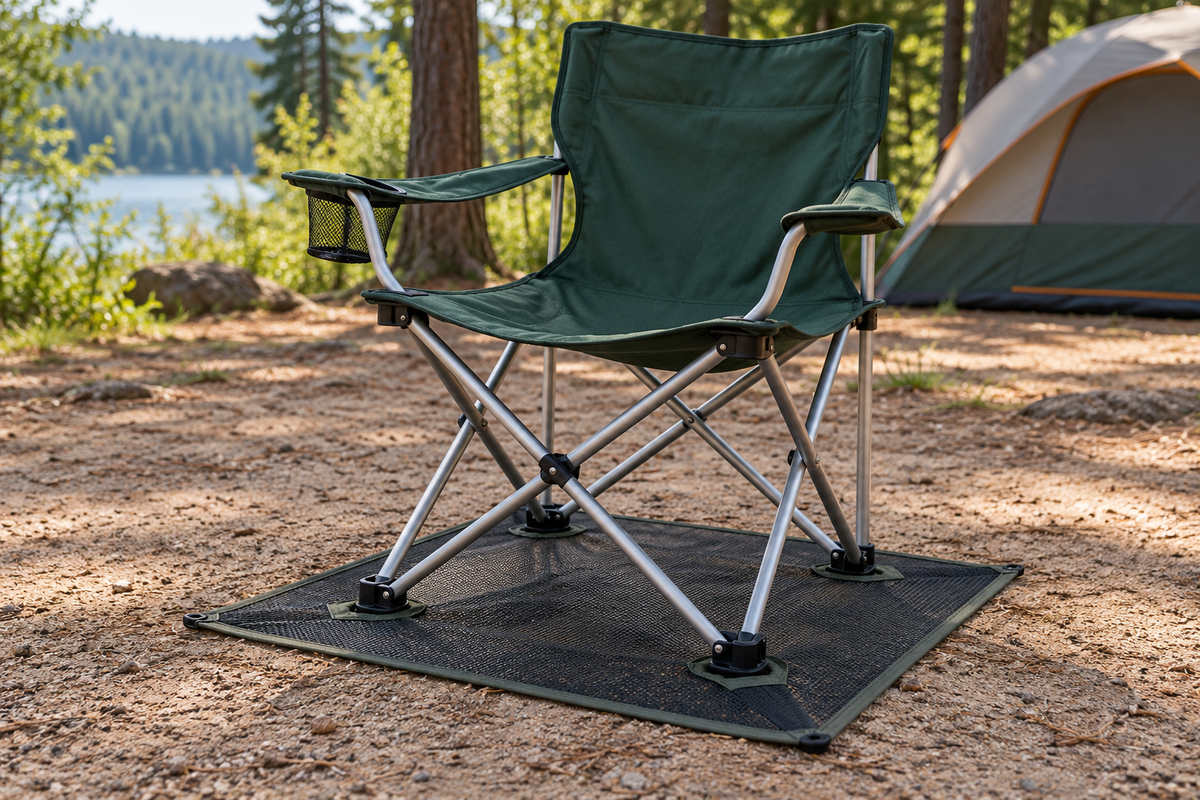
A camping chair can be within its stated weight capacity and still sink into soft ground. The number on the label describes one part of the setup. It does not tell you whether a narrow foot will stay at the surface of sand, damp soil or a loose campsite edge.
Before replacing the whole chair, separate three questions: Is the chair correctly assembled and undamaged? Is the chosen surface suitable? Does the manufacturer offer a compatible base or foot accessory for that situation? Each question leads to a different decision.
The frame rating and the ground do different jobs
The frame supports the seated load; the ground must support the contact points beneath it. A small contact area concentrates that load. On a yielding surface, one foot may settle farther than the others even though the chair itself has not reached its capacity.
A larger capacity number therefore does not automatically solve sinking. Equally, adding something beneath the feet does not increase the manufacturer's capacity. Keep the original limit and use instructions in force regardless of which compatible accessory you add.
The Helinox Ground Chair guide makes this distinction useful in practice: it calls for a flat, solid surface and says its capacity is based on even loading of the frame. That is a model-specific example of why a product name or broad camping description cannot replace its handling instructions.
Look at what actually touches the surface
Set the empty chair up according to its manual on suitable firm ground and inspect the base. Identify the feet, rails or other intended contact areas. Check that the original caps are present, the joints are properly seated and the fabric is attached as directed.
If a foot is missing, a tube is damaged or an assembly does not lock correctly, stop there. A wider base is not a repair for a compromised chair. Find the correct replacement part or ask the manufacturer about service before using it.
When comparing chairs, look beyond the seat photograph. Ask for a clear view of the underside and the setup instructions. Two seats that look similar from above can place their contact points quite differently. Also consider the space the assembled base needs, especially beside a small tent or picnic table.
A chair ground sheet is a fitted accessory
A chair ground sheet is not the same thing as dropping an ordinary tarp underneath. A purpose-made design can connect the feet through a broader base. For example, the Helinox Ground Sheet product page describes corner attachments and a center strap, with versions selected for compatible chair styles.
Treat that as an example of the design, not a promise that this accessory fits any folding chair. Check the exact chair name, size and generation against the accessory's current compatibility information. Similar-looking feet or a roughly matching rectangle are not sufficient confirmation.
Ask whether any original parts must remain in place and how the accessory is attached. Use the maker's directions. Do not remove feet, force corners over the wrong frame or improvise a load-bearing attachment because an online photograph looks close enough.
Sinking and tipping are not the same problem
Spreading contact over more ground can address one cause of settling. It does not turn a sloped, unstable or otherwise unsuitable location into an approved seating area. A broad base can still sit unevenly, and an accessory cannot erase every way a chair may tip.
Choose the location before focusing on the accessory. If the chair does not sit evenly or the surface continues to give way, move to a suitable area. Do not balance a foot on loose stones or build a stack of small objects to compensate for a poor spot.
Keep the chair's normal use in mind too. Sitting within its intended position is different from standing on it, leaning far beyond the base or using it as a step. Read the handling limits rather than treating the capacity label as permission for any load or movement.
Include the complete setup in a buying comparison
If soft-ground use is important, compare the chair together with any manufacturer-approved accessory it needs. Include the packed size, added weight, attachment time and replacement-part availability. A light chair plus several required extras may be less convenient than its chair-only specification suggests.
Before a trip, practice assembling the complete setup in daylight. Confirm that you can identify every attachment point and pack the accessory without losing it. Keep the instructions with the model information, particularly if several similar chairs share a gear cupboard.
The useful upgrade is the one that matches the actual problem. A missing foot needs the correct part. An unsuitable spot needs a different location. A compatible soft-ground accessory may help with sinking, but the chair's assembly, loading and surface requirements still decide where and how it should be used.
Cover: an original editorial illustration of a generic chair setup, not a fitment demonstration for a specific product.


 Tents & Shelter
 Sleep Systems
 Packs & Hiking
 Camp Kitchen
 Light & Power
 Survival & Skills
 Camping 101
 Fishing