Choosing line can feel complicated, but it comes down to three types and a few simple rules.
Monofilament
- Strengths: stretch absorbs shock, easy to tie, floats, inexpensive.
- Weaknesses: stretch reduces sensitivity; thicker for its strength.
- Use it for: beginners, topwater lures, crankbaits, live bait.
Fluorocarbon
- Strengths: nearly invisible underwater, abrasion resistant, sinks.
- Weaknesses: stiffer, pricier, knots need care.
- Use it for: leaders, clear water, finesse presentations, jigs and soft plastics.
Braid
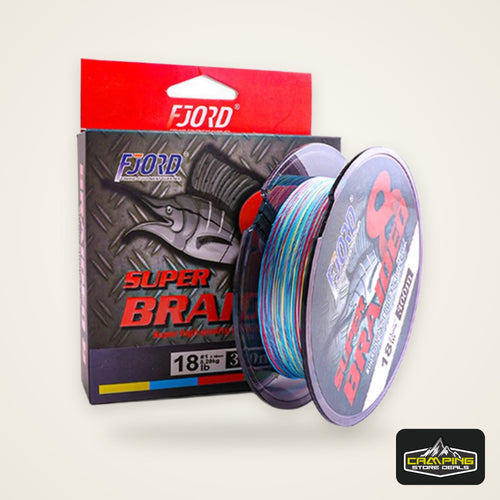
- Strengths: very thin for its strength, zero stretch, incredible sensitivity and casting distance.
- Weaknesses: visible in clear water, can slip on the spool without backing.
- Use it for: heavy cover, long casts, deep water, saltwater.
Pound test cheat sheet
- Panfish and stream trout: 2 to 6 lb mono or fluoro
- Bass and walleye: 8 to 15 lb mono or fluoro, or 20 to 30 lb braid
- Pike, inshore saltwater: 20 to 30 lb braid with a heavy leader
- Surf and big game: 30 to 50 lb braid and a shock leader
When to use a leader
Spooling braid and adding 2 to 6 feet of fluorocarbon gives you braid's sensitivity with fluoro's stealth. For toothy fish like pike, use a heavy or wire bite leader. Connect them with an FG knot or a Double Uni (see our knot guide).
Do the math for your fish
Use the free line and leader calculator to get line type, pound test, reel size and rod power for your target fish. Then shop reels and rods to match.
Spooling your reel the right way
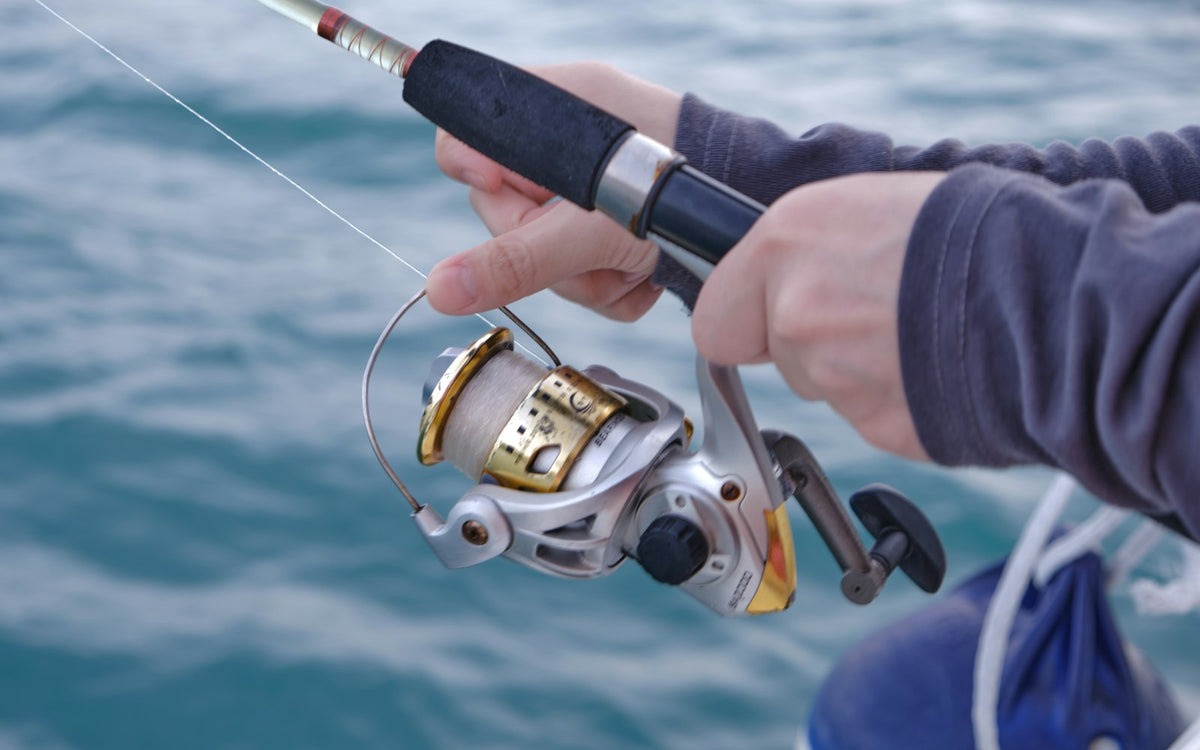
Line twist is the number one cause of tangles on spinning reels, and it usually starts at spooling. Lay the filler spool flat on the floor with the label facing up and reel on under light tension, pinching the line with your fingers. If the line starts coiling, flip the spool over. Fill to about 1/8 inch below the lip of the spool; overfilling causes loops to jump off on the cast.
Braid slips on a bare spool, so put down a few wraps of mono backing or a strip of electrical tape first. On baitcasters, spool under firm tension so the top layers do not dig into loose line below.
How often to replace fishing line
Monofilament breaks down in sunlight and heat and absorbs water, so replace it at least once a season, or every few trips if you fish hard. Fluorocarbon lasts longer but develops memory over time. Braid can last several seasons; when it fades or frays, reverse it on the spool and use the fresh line underneath.
Always check the last few feet for nicks and abrasion after catching a fish or dragging through rocks. If it feels rough, cut it off and retie. A fresh knot costs ten seconds; a lost fish of a lifetime costs a lot more.
Line choice by technique
- Topwater: mono or braid, both float.
- Crankbaits: fluorocarbon for sensitivity and depth, or mono for more stretch to keep treble hooks pinned.
- Finesse and drop shot: light fluorocarbon, or braid with a fluoro leader.
- Jigs and frogs in heavy cover: 50 to 65 lb braid.
- Trolling and bait: mono is forgiving and inexpensive.
Pair the right line with the right knot: a Palomar for braid, an improved clinch for mono and an FG or double uni for leader connections.
Get more fishing tips like this. Join the free Fishing Club for fishing news, first looks at new fishing tech and 10% off your first order.


 Tents & Shelter
 Sleep Systems
 Packs & Hiking
 Camp Kitchen
 Light & Power
 Survival & Skills
 Camping 101
 Fishing