Fish finders come in three main styles, and the best one depends far more on where you fish than on screen size or specs. Here is how they compare.
1. Castable sonar
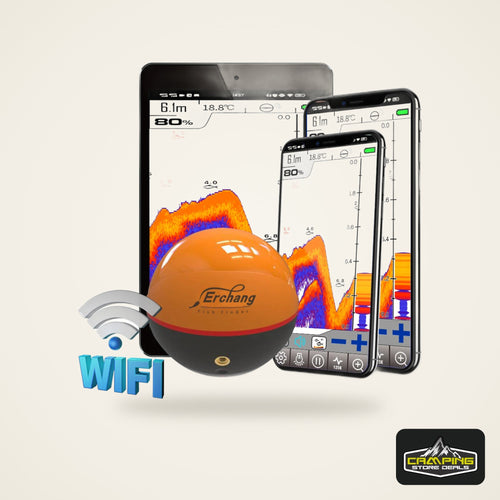
A castable fish finder is a floating sonar puck you cast out on your line. It sends depth, bottom and fish readings back to a handheld screen or your phone.
- Best for: bank and shore fishing, piers, docks and ice holes.
- Pros: nothing to mount, scout water far from shore, very portable.
- Cons: range is limited by wireless signal, and you need to retrieve it to move.
2. Wireless sensor with a dedicated display
Similar to castable sonar, but paired with a dedicated handheld screen instead of a phone. Many include fish alarms and a large, sunlight-readable LCD.
- Best for: anglers who do not want to use their phone on the water, ice fishing, kayaks.
- Pros: long battery life, simple buttons, no app pairing.
- Cons: fewer mapping features than app-based units.
3. Wired transducer
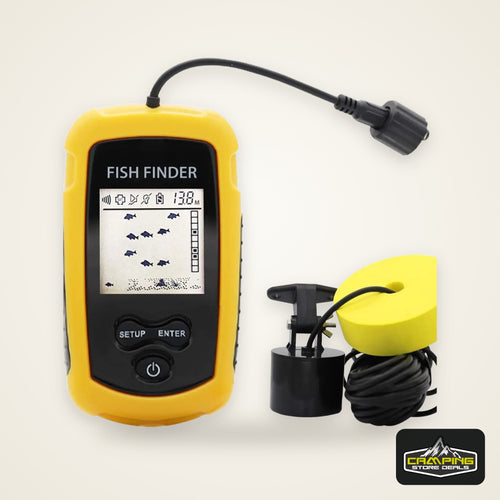
A transducer on a cable connects directly to the display. Portable kits clip to a kayak or small boat, or you can drop the transducer down an ice hole.
- Best for: boats, kayaks and ice fishing where you stay over the spot.
- Pros: reliable signal, constant readings while you drift or troll.
- Cons: you need a place to mount or hang the transducer.
Can't decide? Get a 2-in-1
Some portable units include both a wireless castable sensor and a wired transducer, so you can fish the bank in the morning and a boat in the afternoon. Browse fish finders and sonar to compare.
Quick decision guide
- Mostly shore fishing: castable or wireless sonar.
- Kayak: compact wired or wireless unit, plus a kayak fishing setup.
- Ice: wired transducer or an underwater camera.
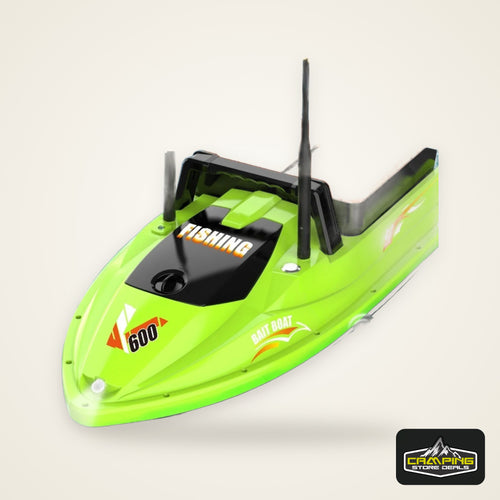
- Carp and bank fishing far from shore: a sonar bait boat scans and drops bait in one trip.
New to sonar? Start with our guide on how to use a fish finder.
Sonar types explained
Beyond the form factor, the type of sonar decides what you see.
- Traditional 2D sonar: shows depth, bottom and fish as arches directly below you. Every fish finder has it.
- CHIRP: sweeps a range of frequencies for sharper separation between fish and structure. Worth paying for.
- Down imaging: near-photographic pictures of what is under the boat, great for spotting brush and rock.
- Side imaging: scans wide to both sides so you can search large areas fast. Mostly for boats.
- Live sonar: real-time video of fish around you. Powerful but expensive and power-hungry.
Power and mounting
Castable units have built-in rechargeable batteries, usually good for 6 to 10 hours. Wireless and wired units need a 12V battery; a compact lithium battery is light enough for kayaks and lasts all day. Mount wired transducers on the transom, a trolling motor or through the hull of a kayak in a scupper or a dedicated transducer well. Keep the transducer below the waterline and level, because a tilted transducer gives a weak or distorted picture.
Budget guide
On a tight budget, a castable unit gives the most capability per dollar and works from the bank, dock and kayak. In the mid-range, a wired unit with CHIRP, down imaging and GPS is the best value for small boats and kayaks. Higher budgets unlock larger screens, side imaging, mapping and live sonar. Whatever you choose, learn to read it with our beginner fish finder guide, and compare models in our fish finder collection.
Get more fishing tips like this. Join the free Fishing Club for fishing news, first looks at new fishing tech and 10% off your first order.


 Tents & Shelter
 Sleep Systems
 Packs & Hiking
 Camp Kitchen
 Light & Power
 Survival & Skills
 Camping 101
 Fishing